
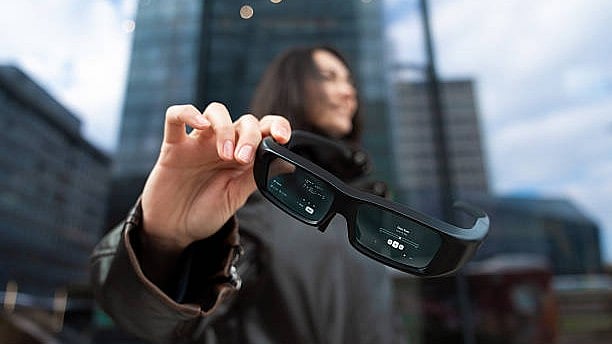
Privacy through the lens of smart glasses
In 2012, Google introduced ‘Glass Explorer’, which allowed users to take pictures and record videos with a simple voice command. These glasses, introduced exclusively in the United States and the United Kingdom, faced severe academic and public backlash for violation of privacy, particularly against users and Google for secretively filming people. It compelled users to stop wearing the glasses in public. Google officially stopped selling the Explorer edition in 2015.Over a decade later, Meta made its entry into the domain of ‘smart glass’, and Meta’s version of glasses has been hugely successful across the globe. While digital rights activists have criticised the product, it has not faced the severe backlash that Google once did. Interestingly, Meta’s glasses possess the same threat that Google glasses once did. It raises serious concerns regarding privacy, consent, and surveillance. The threat is magnified by the use of generative AI. The unconsented image could be edited by using image generation AI platforms to paint an image which is very different from the original. India’s legal ecosystem has a complex problem to solve with the growing popularity of Meta glasses and allied technological advancements.The Supreme Court of India in 2017 declared privacy a fundamental right. However, its enforcement on social media platforms remains a fractured mandate to date. Section 79 of the Information Technology Act, 2000, and the provisions of the Information Technology Rules 2021 mandate the take-down of offensive content in a time-bound manner.However, when faced with ground realities, these provisions work differently. Recently, in New Delhi, a content creator allegedly rage-baited a lone man sitting inside a café enjoying his tea into an uncomfortable interaction. Later this man found that the entire interaction was uploaded on a social media platform which went viral, garnering considerable views, likes and comments, mostly mocking the victim. Although the victim tried to report the platform for content takedown, the platform’s reporting menu lacked a specific category for privacy violations or ‘non-consensual recording’, and the victim’s complaints and appeals were dismissed via automated boilerplate response systems claiming that the content uploaded online occasioned no violation of ‘Community Standards’ that could merit take-down.Further, the courts have begun recognising and granting protection to personality rights of well-known persons against unconsented usage of name, image, likeness, voice, and personal attributes. In the age of Meta glasses, these violations do not happen only to celebrities but also to the general public. It is now time for legislative interference to shed light on the rights of individuals as well.Not only software developers but also makers of such hardware and wearables facilitating stealth recordings must be included in these debates. It is pertinent to mention that the Copyright Act negatively secures the performer from being recorded without their consent; any recording without the consent would amount to a violation of the performers’ right. Annoyed by secret recordings, developer creates ZuckOff app to detect nearby Meta, Snap smart AI glassesThe glasses may very well allow a user to record an entire movie or a stand-up comedy show or even a classroom lecture without the consent of the performer.In the recent New Delhi incident, the eyewear (sunglasses) being sported by the content creator was made by a company that sells its products, distinguishing them from ordinary fashion wear. The corporations concerned with the design, manufacture and sale of these wearables had defended their design, stating that privacy concerns are unfounded, as the product has an LED light alerting others to the fact that the event is being recorded.This argument is on a slippery slope, as the LED light may not even be visible from a distance. Further, the cameras in the glasses are technologically advanced to record from a distance without being visible as well. The efficacy of these LED light safeguards was questioned by the Irish Data Protection Commission and the Italian Garante way back in 2021 itself. In such cases when injury can reasonably be foreseen by way of such stealth designing of wearables, the corporations concerned with their design, manufacture and sale should also be made liable for the injury and distress suffered by the victim of such a non-consensual recording.India now adopts a case-by-case approach; these glasses are prohibited in public places such as temples. Considering the Meta Glasses’ case is quite different from its predecessors, it warrants a legislative clarification to balance the privacy of individuals, the performance rights of performers, and the rights of users. The current legislation does not clarify the same.(The writers are assistant professors at the KIIT School of Law) (Disclaimer: The views expressed above are the author’s own. They do not necessarily reflect the views of DH.)
Source: Deccan Herald
🔑 Key Takeaways
- Wire dispatch directly ingested from deccanherald.
- Published at Sun, 20 Sep 2026 21:59.
- Source URL: https://www.deccanherald.com/opinion/privacy-through-the-lens-of-smart-glasses-4153177