
Disaster relief is not a favour from Delhi
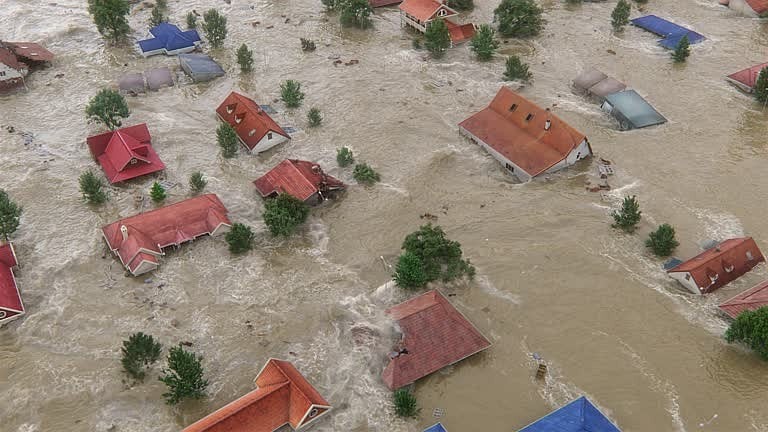
This year we have seen devastating floods in Nepal and in our own northern and northeastern states, while in Raichur, the constituency that I represent, we are living through one of the worst droughts in memory. These two experiences, which appear opposites, are part of the same story. According to reports, India lived through extreme weather on 331 days in 2025 — on nine days out of 10, some part of this country was in trouble. That statistic should have shaken us. Instead, a kind of fatigue seems to be settling over the country, creating a sense of ‘new norm’.That numbness is the real danger. It allows the government to carry on as though each disaster were an act of God, rather than the most pertinent governance question of our time.After a state faces climate disaster, the sequence of events is always the same. The state writes to the Centre, a team flies down from Delhi and tours the affected areas, files a report, and money is released weeks or months later in an amount that nobody can predict, depending far too often on the political dynamics of the moment. Relief in this country is still treated as charity. India loses Rs 1.32 lakh crore every year to extreme weather and disaster. However, in 2024, the National and State Disaster Response Funds together released only Rs 11,500 crore for immediate relief.The deeper problem is that the climate finance in India is overwhelmingly tilted towards renewable energy and transport, while agriculture, forests and land use, along with water and waste systems, remain underfunded as cited in the NITI Aayog’s documents, even though these are precisely the sectors that decide whether a district survives the next drought. The government is happy to advertise solar capacity but is largely silent on the harder work of mobilising resources to meet climate disasters and to build climate resilience.Citizens need safety nets during climate disasters. The country today has some form of safety nets for farms but not around labour. Prime Minister’s Fasal Bima and Kisan Samman schemes reach the land-owning farmer, while the agricultural labourer who has lost a daily wage or the construction worker standing through a forty-five-degree afternoon have no true safety net. At least in Karnataka, the guarantee schemes have been the saving grace.None of these failures is technical, and every one of them can be fixed within the life of a single Parliament, provided we are willing to change how decisions are made rather than merely how they are announced.The first change is to make loss and damage automatic so that compensation is released by a technical trigger and not by a committee. When satellite data and the competent authority confirm that a pre-agreed threshold has been crossed, whether in rainfall deficit, flood extent or duration of heat, the payout should go out on its own, without a delegation, negotiation and phone calls to Delhi.Second, and this is the harder reform, we must rebalance power between the Centre, the states and the district, because climate respects no boundary. Our states are chasing trillion-dollar economies and foreign investment, as they should, but what they need alongside that ambition is a clear, scientific and transparent basis for taking decisions so that development continues while the long-term risk cost of each choice is known and owned.Additionally, we should start paying for resilience the way we already pay for roads, by routing a fixed share of every interstate and intrastate infrastructure budget into a Climate Adaptation and Resilience Fund, which would look well beyond the present scope of the Disaster Response Fund. That money should stabilise slopes and restore water systems before the season turns.The same logic should decide where and what we build. Districts identified as climate vulnerable should receive additional funds for resilient public infrastructure, including primary health centres and residential schools for climate migrant workers, so that the preventive and resilience measures are made available.None of this is impossible but requires a government willing to surrender discretion, since every reform listed here takes power away from the people who currently decide. A government that is serious will hand the decision to a satellite trigger and a formula, while a government that prefers the photograph of the relief visit and the compensation announcement will keep the delegation and the discretion.Climate belongs to no ideology and stops at no boundary. Its worst impact, however, is always borne by the weakest, and there can be no Viksit Bharat until we have built resilience for our most vulnerable citizens.(The writer is a retired IAS officer and Congress Lok Sabha member from Raichur)
Source: Deccan Herald
🔑 Key Takeaways
- Wire dispatch directly ingested from deccanherald.
- Published at Wed, 30 Sep 2026 20:44.
- Source URL: https://www.deccanherald.com/opinion/disaster-relief-is-not-a-favour-from-delhi-4166033