
In 1863, 21-year-old Satyendranath Tagore became the first Indian to qualify for the elite Indian Civil Service (ICS) under British rule. He travelled to England to sit for an examination that, at the time, was conducted…
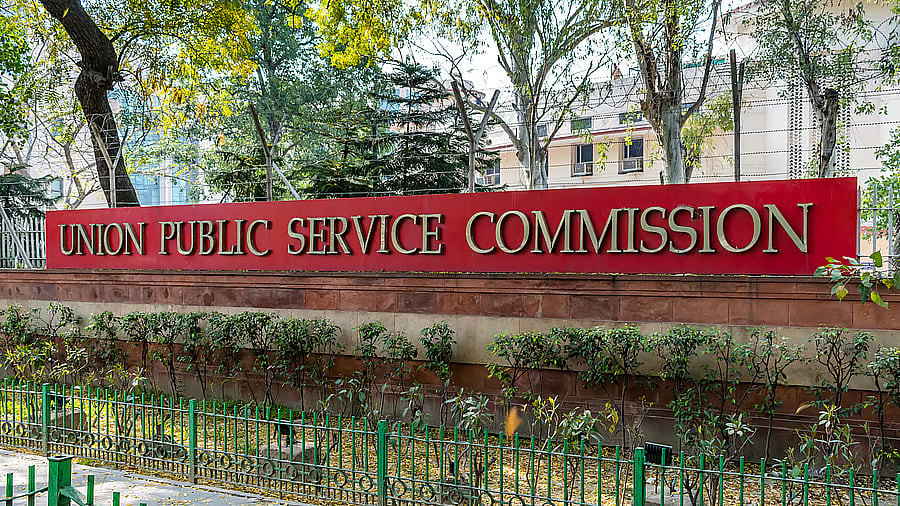
In 1863, 21-year-old Satyendranath Tagore became the first Indian to qualify for the elite Indian Civil Service (ICS) under British rule. He travelled to England to sit for an examination that, at the time, was conducted only in London and in English, with subjects including Greek and Latin.It was an open competitive system, but one that almost none Indians could realistically get access to,It was not until 63 years later, in 1926, that a Public Service Commission was set up in India. A century later, the Union Public Service Commission (UPSC) has become synonymous with competitive examinations and merit for generations of Indians.But the journey from the ICS to today’s UPSC has been a long one, shaped by a series of reforms that gradually transformed how the country’s civil servants were recruited.Source: Press Information Bureau.How UPSC startedThe roots of India’s civil service recruitment go back to 1855, when the British introduced competitive examinations for the ICS, replacing the East India Company’s system of nomination. The exam was held in London, and its language and syllabus made it difficult for Indians to compete. Satyendranath Tagore, Rabindranath Tagore’s elder brother, became the first Indian to enter the service, paving way for aspiring Indians. But even by 1919, only 78 of 1,255 ICS officers were Indian.In 1922, the ICS examination was held in India for the first time, in Allahabad, alongside the London exam. The centre was later shifted to Delhi. In 1924, the Lee Commission recommended a statutory Public Service Commission. Two years later, on October 1, 1926, India’s first Public Service Commission was established.Satyendranath Tagore became the first Indian to qualify for the elite Indian Civil Service under British rule.The Commission, however, was not yet the powerful constitutional institution it is today. The Commission initially served as an advisory body, headed by British civil servant Sir Ross Barker, and operated from Metcalfe House in Delhi.On April 1, 1937, the Public Service Commission became the Federal Public Service Commission. Around the same time, combined competitive exams were introduced for several services, laying the groundwork for a common recruitment system.By 1940, the composition of the ICS had also changed significantly. For the first time, Indians outnumbered Europeans in the service, with 625 Indians compared with 575 Europeans.Post-independence reformsThe year 1947 changed what the civil service represented. With Independence, the ICS gave way to the Indian Administrative Service (IAS), and the Federal Public Service Commission was later renamed the Union Public Service Commission. H K Kripalani became the Commission’s first Indian chairman in 1947. The first examination after Independence was held that December, followed by the recruitment of the first batch of Indian Foreign Service (IFS) officers through the combined examination in 1948. UPSC CSE Prelims 2026: Aspirants approach Rahul Gandhi; flag ‘ambiguous’ questionsWhen the Constitution came into force on January 26, 1950, the Federal Public Service Commission became the Union Public Service Commission (UPSC). Unlike its predecessor, UPSC was now a constitutional body, with its role defined under Articles 315 to 323. Its mandate went beyond conducting examinations to advising the government on recruitment, appointments, promotions, transfers and disciplinary matters.From thousands of applications to lakhsIn 1950-51, UPSC received just about 42,727 applications across its examinations and recruitment by selection. The number crossed one lakh in 1976 and continued to rise, reaching 45.10 lakh by 2022-23, more than 100 times than in 1950.The Civil Services Examination, in particular, has grown into a highly competitive selection process. In 2025, 9,37,876 candidates applied and 5,76,793 appeared for the Preliminary exam. Of these, 14,161 qualified for the Main examination, 2,736 reached the Personality Test and 958 were recommended for various services.Should you prepare for UPSC? Ask these questions firstHow the exam changed with the countryThe examination itself has changed remarkably over the years.A major shift came in 1979, when the three-stage system of Preliminary examination, Main examination and interview was introduced following recommendations of the D S Kothari Committee. Computers were introduced into UPSC’s work in 1978, followed by OMR technology in 1989. The structure continued to evolve. The Civil Services Aptitude Test (CSAT) was introduced in 2011. The Main examination was restructured in 2013, with four General Studies papers and a paper on Ethics, Integrity and Aptitude, while CSAT was made a qualifying paper in 2015.The examination has also moved steadily online. UPSC introduced online applications around the turn of the century, followed by further digital systems for registration and marks-related information. In 2025, it introduced a Universal Registration Number.Source: PIB In 2026, as UPSC marked its centenary, the examination moved further into the digital age. The Commission introduced AI-based facial authentication on a large scale for the Civil Services Preliminary examination and also released a provisional answer key for the exam, allowing candidates to submit representations online. Who gets to compete has changed tooIn 1952, women accounted for just three of 83 candidates recommended through the CSE. In CSE 2025, women accounted for 299 of 958 candidates, or 31.2 per cent. They also secured 11 of the top 25 ranks. Language, too, became less restrictive. In 1970-71, the Commission had told the government that the Personality Test could be conducted only in English. By 1980-81, candidates could answer the interview in an Indian language with an interpreter provided by the Commission. Today, UPSC conducts examinations for a range of services, including civil, forest, engineering, medical and defense services. Every year, lakhs of candidates apply, with many spending years preparing and taking multiple attempts for a limited number of posts. In a hundred years since its establishment, UPSC has become one of the country’s most competitive public recruitment processes.
Source: Deccan Herald
🔑 Key Takeaways
- Wire dispatch directly ingested from deccanherald.
- Published at Thu, 01 Oct 2026 10:24.
- Source URL: https://www.deccanherald.com/education/hundred-years-of-upsc-how-indias-civil-services-exam-has-changed-over-the-years-4166708