
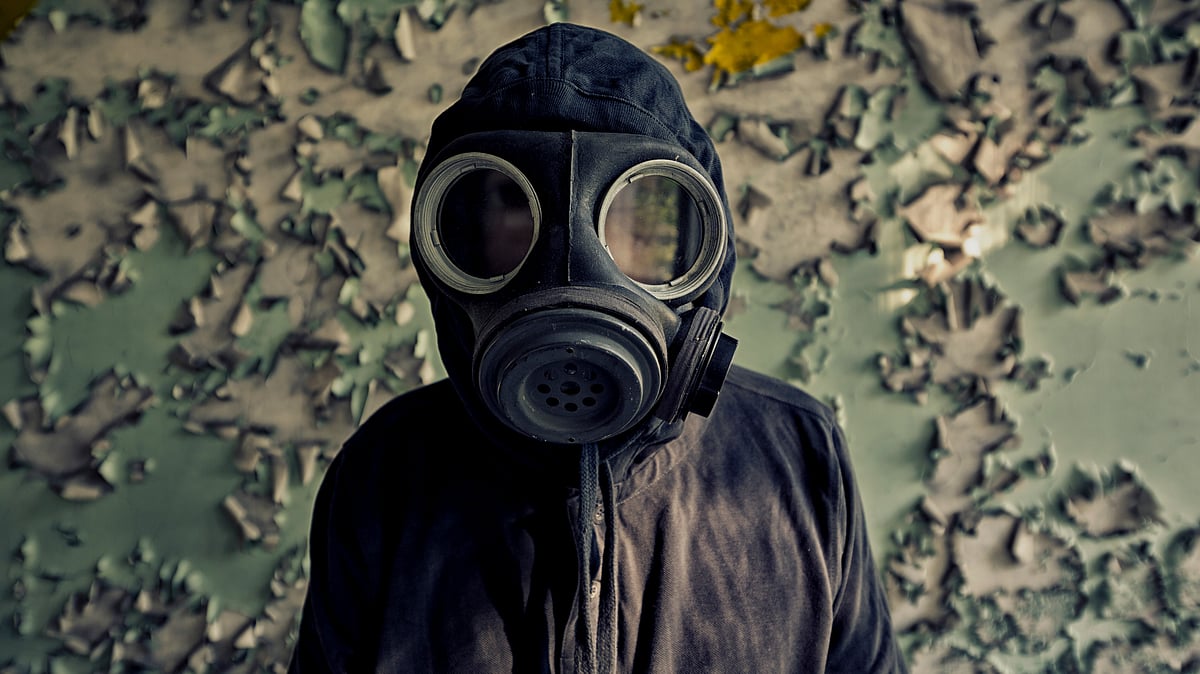
The mysterious death of a researcher at a Siberian laboratory has triggered a parallel memory of the Chinese doctor who had warned about a dangerous illness that was quietly making its presence known in the country. Then…
The mysterious death of a researcher at a Siberian laboratory has triggered a parallel memory of the Chinese doctor who had warned about a dangerous illness that was quietly making its presence known in the country. Then COVID hit the streets and the world never felt the same again.Donald Trump’s administration has reportedly created pressure on Moscow to disclose the details as to what may have unfolded in the Siberian plague laboratory where a 28-year-old lab worker, identified as Darya Shipilova, fell sick and eventually died a few days later.So far, it has been announced that the lab worker died of pneumonia of undetermined etiology’.Reports emerging last week revealed that about 200 people have been kept in quarantine in Siberia’s Irkutsk region, following the death. “Maybe there’s nothing there. Maybe it’s bigger than we thought. We don’t know,” the United States Secretary of State Marco Rubio has told international media.Russian regulator says no epidemic risks after death of plague institute worker Lack of transparencyAs per Wall Street Journal, while Moscow has provided some information about the lab death to the World Health Organization (WHO) but it chose to keep discreet the kind of tests which were run to confirm the diagnosis.With international health watchdog like WHO and the United States keeping close tabs on what may be happening inside Siberia’s Irkutsk region, it has sparked curiosity and fear in countries, particularly on the border which have tightened security measures near airports.While lack of transparency by Russian officials is making uncanny parallels with the coronavirus pandemic, infectious disease experts believe it may just be a case of accidental exposure, saying the probability of it being an endemic or a pandemic is close to zero.What may have happened at the lab?As per an article published in the journal Science, when the lab technician died on October 2, in a town called Shelekhov, the governor of the neighboring republic of Buryatia stated that the woman died ‘possibly from the plague’.Reportedly, a Russian journalist Pavel Stepanov wrote on his telegram handle that the technician allegedly had broken a vial containing the lethal pathogen and may have kept this fact concealed.Likewise, there are independent anecdotes which are making authorities elsewhere a little worried.While the claim has not been confirmed by any Russian official, nonetheless, it is indicative of poor lab hygiene.As per experts, people who get exposed to pneumonic plague get sick rapidly and their health can turn critical within a few days.It is the only form of plague that can spread from person to person, informed the Centers for Disease Control and Prevention (CDC).Also, since the incubation period is fairly small, the infected person is less likely to meet many people or attend any social settings while they are infected, experts have said.Should the world be worried?Plague has earned a bad reputation in the past and was called the ‘black death’. It has a blotted history of killing millions before hygiene improved and antibiotics were developed.Today, it has become rare but the bacteria Yersinia pestis which causes the illness persists in many regions, including Mongolia, Russia, some parts of China and other parts of Central Asia.As per CDC, there can be three forms of plague, the bubonic form which needs a vector to do its dirty work (flea bite). It can cause lymph nodes to swell and turn black.Then there is septicemic plague which affects the blood and can turn skin, fingers and other tissues black.The pneumonic plague directly affects the lung and causes severe respiratory breakdown if not treated in time.While all three can cause severe illness, pulmonic plague is the most challenging of all because of poor efficacy of vaccines, said Dr Palleti Siva Karthik Reddy, a consultant physician at Elite Care Clinic.Indian doctors on pneumonic plagueTo understand the prognosis of pneumonic plague and growing international concern, DH spoke to medical experts to grasp if the situation is genuinely worrisome.“A person working inside a nuclear reactor need not be told that radiation is harmful. They know what they are dealing with. Likewise, people who work with such lethal pathogens know the stakes. To start with, these accidental leaks are rare and do raise concern about lab security and hygiene,” said Dr Yogiraj Ray, an associate professor (Infectious Diseases) at the Institute of Post Graduate Medical Education and Research (IPGMER ), in Kolkata.However, the expert reassured that there is apparently nothing to worry as of present.“If the case was reported from the community, there would still be some grounds to worry. But, a person who literally works with plague-causing bacteria has died. It sounds much more incidental than something widespread. Proper contact tracing and containment can largely bring the situation under control,” he added.Spreads largely by dropletsSpeaking to DH, Dr Palleti Siva Karthik Reddy said as opposed to coronavirus, pneumonic plague is a bacterial illness.“Unlike bubonic plague which is vector-dependent, the pneumonic form results from direct exposure to the bacteria or respiratory droplets. When the infected person coughs germs into the air and others happen to inhale it, this causes it to spread,” added Dr Reddy.Since it’s a bacterial infection, people have a safeguard — antibiotics, reassured the doctor.There are some standard antibiotics which are given to individuals suspected to have plague, including Ciprofloxacin, Levofloxacin, Doxycycline and some others.While antibiotics are there, the timing of administration is also important. Pneumonic plague can swiftly turn into a life-threatening emergency, hence, many times doctors won’t even wait for lab results to arrive before they administer drugs .“Antimicrobial resistance can be another big challenge that can make treatment ineffective in a medical condition that peaks out in such a short window,” informed Dr Reddy, talking about potential complications if the disease blows out of proportion.As per reports, if left untreated, pneumonic plague can have a fatality rate nearly touching 100 per cent.COVID versus plagueSpeaking to DH, Dr Ravi Kesri, a consultant in internal medicine at Apollo Spectra hospital (Bengaluru) said there are considerable differences in the pathophysiology of coronavirus and plague.“To start with, COVID is caused by a family of viruses and plague is a bacterial infection. Hence, these are two very distinct pathogens in consideration,” said Dr Kesri.The expert further informed that unlike coronavirus which can have asymptomatic or pre-symptomatic transmission, it is highly unlikely to catch plague from a seemingly healthy person.“The infected person will be seriously ill in no time and not roaming around in the streets,” said Dr Kesri.Not a good candidate for causing pandemicsSpeaking on the nature of transmission, Dr Kesri informed that plague has high potential for causing localized infections where disease can rapidly spread through respiratory droplets. However, due to the long incubation period, COVID can easily bypass border checks, making it more prone to cause pandemics.“COVID has fairly higher mutation rates, creating immune evasive variants. This is not the case with bacteria causing pneumonic plague,” added Dr Kesri.Talking about the potential treatments, the health expert further informed that bacteria-driven illnesses can be treated if antibiotics are administered at the right time. Conversely, viral illnesses largely depend on supportive care.Peaks out fastCalling plague an illness with a very low incubation period, Dr Kesri said: “Transmission clusters manifest rapidly and burn out quickly once contacts are quarantined and treated.”He said if the close contacts or people quarantined are given preventive medicine, the situation can be controlled without any escalation.Ethical concerns As per reports, the bacteria causing plague is often listed in the Tier 1 select agents which includes pathogens that can be deliberately misused.Because of its high fatality rate and low infectious dose, the pathogen carries a serious risk of being used for cross-border bioterrorism.Hence, the apprehensions around the death of the lab worker from plague can be reasonable when it comes to the national security of any country.
Source: Deccan Herald
🔑 Key Takeaways
- Wire dispatch directly ingested from deccanherald.
- Published at Wed, 07 Oct 2026 17:02.
- Source URL: https://www.deccanherald.com/health/plague-lab-death-one-russian-laboratory-pathogen-leak-and-uncanny-flashback-to-2019-4173943