
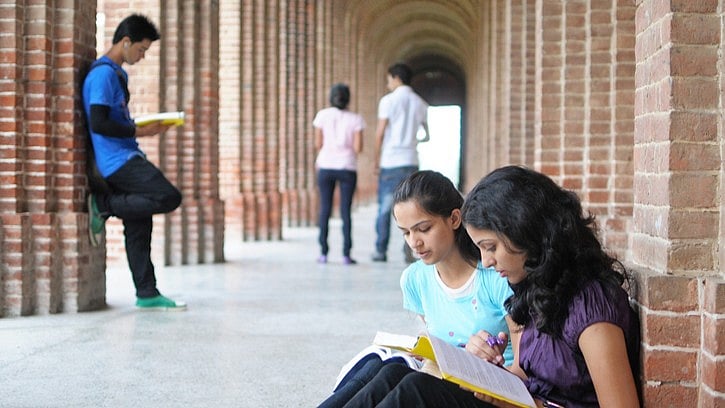
Higher education needs investment, autonomy to flourish
Indian higher education, which until some years ago placed considerable emphasis on the humanities, reasoning, critical inquiry and culture, is now undergoing a transformation driven by information technology, data systems, managerial practices and techno-bureaucratic governance.The university, once a vital institution, has in many respects been allowed to deteriorate. In some areas, higher education promotes neither life skills nor life perspectives — an approach unbecoming of a university. Yet selected disciplines, such as languages, have continued to develop as they should in a university.In Karnataka, two issues are particularly problematic: the shortage of qualified vice-chancellors and permanent faculty; and the increasing dependence on temporary and guest teachers, who have less institutional security and fewer opportunities for sustained research.Government-funded institutions such as the Indian Institute of Science (IISc) demonstrate what sustained investment in higher learning and research can achieve.University leadership matters significantly. A competent vice-chancellor, with academic authority and vision, can transform an institution. Strong academic leadership also depends on the appointment of accomplished scholars. Yet search and selection committees can remain vulnerable to pressure from governments and governors-chancellors.Karnataka: Higher Education Dept appoints experts to analyse curricula of Oxford, HarvardA number of colleges and universities, despite having considerable capacity, remain underutilised. Undergraduate admissions are only about 4.3 lakh. The gross enrolment ratio is 33%, with seven districts below 20% and only 10 above 30%.Students are increasingly moving away from traditional degree courses towards professional programmes in computer applications, commerce and business administration. Colleges are now seeking courses in artificial intelligence, data science and health sciences. Public universities must respond by attracting top-class faculty. Yet the problem of staffing remains acute. According to the Karnataka State Education Policy Commission report (2025), 55% of the 4,182 sanctioned faculty positions are vacant. Government colleges too have substantial vacancies.Access to higher education has improved, but quality remains a serious concern. Of over 3,500 colleges in the state, fewer than 25% have obtained NAAC accreditation. At the university level, only 32 of 86 institutions had been accredited, according to the Karnataka SEP Commission.Inequity in access to competent teachers, weak research, inadequate infrastructure and poor teaching quality require urgent attention. That requires urgent investment in higher learning.Karnataka’s 2026-27 education allocation is Rs 47,224 crore, including Rs 6,432 crore for higher education. Education as a whole accounts for a little over 10% of the state budget and less than 1.5% of GSDP. Yet around 80-90% of the higher-education allocation is consumed by salaries, leaving little for laboratories, libraries and research.Split leaves state universities in Karnataka cash-strapped; quality of higher education takes a hitsWe cannot expect world-class universities without investing in the conditions that make scholarship possible.Learning involves new ideas, experiments and failures. Scholarship requires testing hypotheses, accepting counter-arguments and examining different kinds of evidence. For this, a university must have comprehensive academic and administrative autonomy.The government continues to exercise influence over the appointment and functioning of vice-chancellors, registrars, finance officers, syndicates and other bodies. If governments can influence syllabi, courses and textbooks according to the ideological preferences of the party in power, university autonomy is compromised and academic institutions are weakened.Perhaps the most serious failure is the continuing vacancy of sanctioned teaching posts. In some universities, 75 to 90% of sanctioned positions are reportedly vacant. At the University of Mysore, 407 of 460 sanctioned posts were reported to be vacant. At Karnataka University, Dharwad, 386 of 600 positions were vacant.The government needs to reconsider the entire structure. A liberal, publicly funded university should have a Board of Governors in which government nominees are in a minority. The remaining members could include distinguished academics, professionals, industry representatives and members of civil society.V K R V Rao, who served as Union education minister, believed that universities and specialised research institutions should be insulated from government so that their critical assessment of public policy could remain trustworthy. On this principle, he helped establish institutions such as the Delhi School of Economics and the Institute for Economic Growth. Incidentally, Rao appointed Amartya Sen and Manmohan Singh to such institutions.The response to Karnataka’s higher-education crisis is unlikely to come through greater bureaucratic supervision, as personal aspirations often trump institutional interests. Jawaharlal Nehru had worried about this decline as far back as September 1955: “What is worrying me greatly is the rapid and progressive decline in our educational standards. It is really astonishing how these standards are falling, and if this process goes on, it simply means that we shall become a third-rate nation, in spite of our efforts in other directions.” (Nehru’s Letters to Chief Ministers, 1947-1963).If the government insists on accountability for public expenditure on universities, should the same principle not apply to public funds given to religious matts and politically connected caste associations?Chandrashekar is a former dean and director [in charge], IIM-B, a former minister, and chairman, Karnataka Legislative Council; Deshpande is a former director, Institute of Social and Economic Change(Disclaimer: The views expressed above are the author’s own. They do not necessarily reflect the views of DH.)
Source: Deccan Herald
🔑 Key Takeaways
- Wire dispatch directly ingested from deccanherald.
- Published at Thu, 08 Oct 2026 20:09.
- Source URL: https://www.deccanherald.com/opinion/higher-education-needs-investment-autonomy-to-flourish-4175656