
A Class 12 student from Rajasthan has developed a research prototype that explores whether magnetic nanoparticles could help capture microplastics from blood. Suramrit Singh Kohli, studying at Jayshree Periwal Inter…
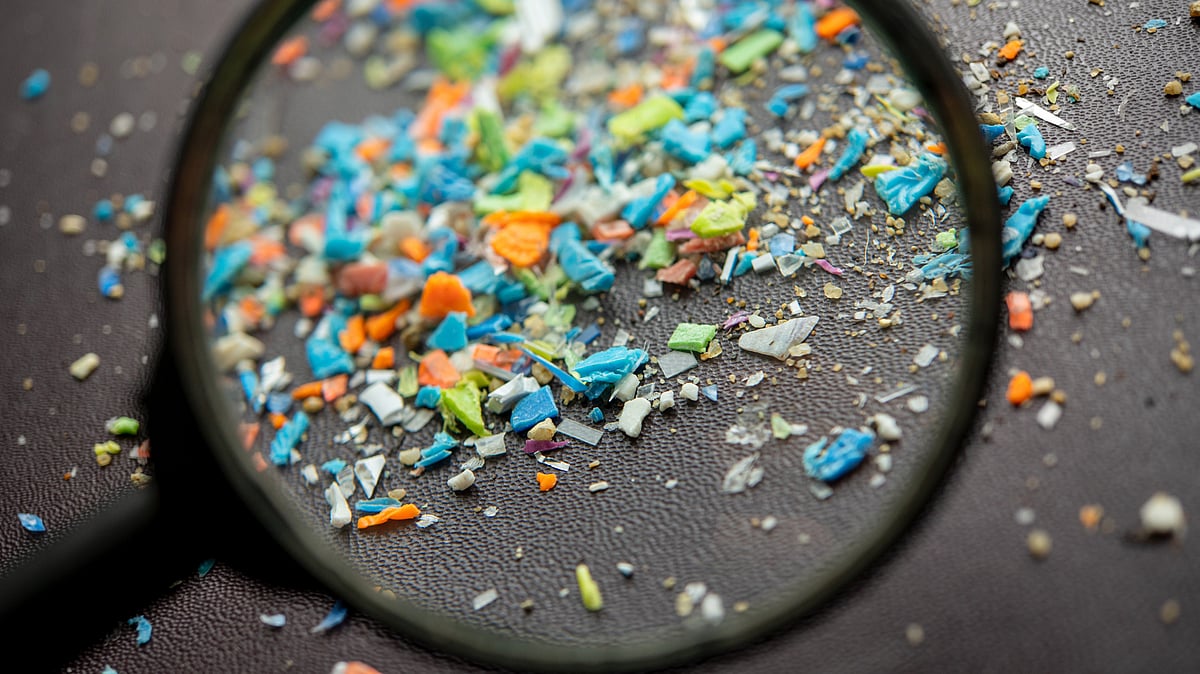
A Class 12 student from Rajasthan has developed a research prototype that explores whether magnetic nanoparticles could help capture microplastics from blood. Suramrit Singh Kohli, studying at Jayshree Periwal International School, has always been curious about applying engineering to real-world challenges. This led to the creation of NanoClear, analysing how specially designed magnetic nanoparticles can bind plastic particles, allowing them to be separated using magnetic fields. “Microplastics are a problem that we are still learning to understand, and I wanted to explore whether engineering could offer a way to address what happens once these particles enter the bloodstream. NanoClear is still at the research stage, but working on it has shown me that building a possible solution also means understanding its limitations and working out what to solve next,” Kohli said.His project started to take shape during Brown University’s Summer@Brown programme. In August 2025, Kohli continued his research at ReeLABs Research Centre in Mumbai under Dr Abhijit Bhopadikar, working with human blood samples for approximately 20 hours a week.River discharge and fishing waste major sources of microplastic pollution along Indian coast: GovtIISc study tracks microplastic toxicity in zebrafish, reveals health risks to humansWhat happens to microplastics once they enter the bloodstream? Microplastics are everywhere. They are tiny pieces, less than five millimetres long. They are environmental pollutants, found in oceans, soil, and the air we breathe. They originate either as purposefully manufactured tiny particles or due to the breakdown of larger plastic waste. Because of their small size, they are easily ingested through the food chain and persist everywhere in the environment. They are virtually impossible to remove once released in the environment. Due to these characteristics, microplastics are considered hazardous to human health. Researchers explain that once inside the body, microplastics do not just pass through; they can migrate and be found in multiple tissues and organs, including the brain, liver, lungs, placenta, blood, urine, and bone marrow. They can cause cellular damage and chronic irritation in tissues. Moreover, they can affect a woman’s reproductive health and can even be carcinogenic. Key findings of Kohli’s researchKohli’s research involved nanoparticles measuring approximately 91 nanometres, with a positively charged inner coating designed to attract negatively charged plastic particles. Building on this principle, he developed an external magnetic separation system in which blood is intended to mix with the nanoparticles and pass through a magnet-lined coil. The system is designed to capture the resulting clusters before the blood returns to the circuit.Early laboratory investigations provided preliminary evidence of particle binding. Electron microscope images captured at Brown University by Dr Webster showed nanoparticles surrounding a fragment of polyvinyl chloride (PVC). In a separate experiment using human blood spiked with microplastics, a turbidity sensor recorded a reduction in the sample’s cloudiness reading from 249.3 to zero after one pass through the system.The prototype has not been tested on patients or approved for medical use, and further work is needed to assess toxicity, blood compatibility and performance at a larger scale. Global recognition: From IRIS National Fair to ISEF 2026Meanwhile, the project’s progress has earned recognition beyond the laboratory. At the IRIS National Fair in January 2026, NanoClear won gold and the Yale Science and Engineering Association’s Award for Most Outstanding Exhibit in STEM, one of three such awards among approximately 120 finalists. The Gold award secured the project a place among roughly 20 projects representing India at the Regeneron International Science and Engineering Fair (ISEF) 2026 in Phoenix, Arizona. At ISEF, NanoClear also received a special award from Zydus, carrying a prize of US$1,250.
Source: Deccan Herald
🔑 Key Takeaways
- Wire dispatch directly ingested from deccanherald.
- Published at Thu, 22 Oct 2026 10:42.
- Source URL: https://www.deccanherald.com/health/healthcare/class-12-student-develops-prototype-to-extract-microplastics-from-human-blood-4191265