
Uber’s AI coding bill and a Forrester finding on AI layoffs point the same way. Uber spent its entire 2026 AI coding budget in four months, and its COO has questioned whether it is worth it. Forrester’s research foun…
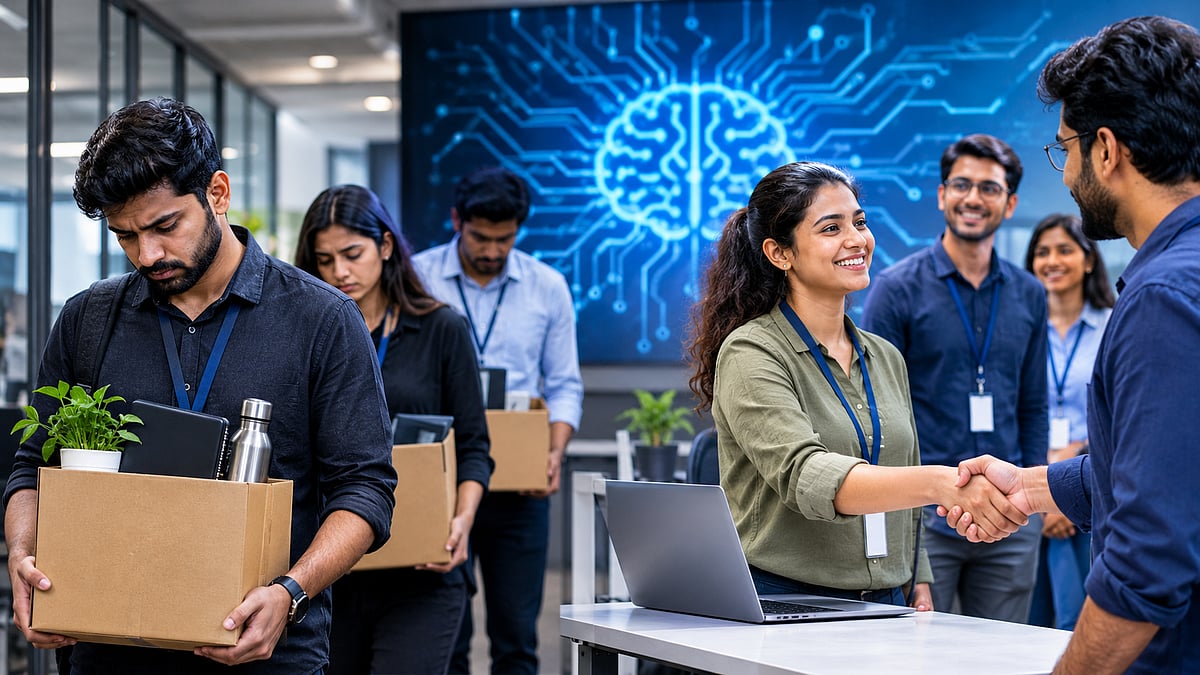
Uber’s AI coding bill and a Forrester finding on AI layoffs point the same way. Uber spent its entire 2026 AI coding budget in four months, and its COO has questioned whether it is worth it. Forrester’s research found that 55% of employers regret laying off staff because of AI and expects half of those layoffs to be quietly reversed. The bet that automation could replace developers is unwinding, and experienced engineers are the ones in demand.The risks of leaning on automation aren’t hypothetical. In March, Amazon contested reports that AI had caused several retail outages, saying only one incident involved AI-assisted tooling and none involved AI-written code. That one stemmed from an engineer following inaccurate advice that an AI tool inferred from an outdated internal wiki. Automating development doesn’t remove the need for human judgment, oversight, and accountability.Microsoft’s CEO has said up to 30% of the company’s code is written by AI. Layoffs, hiring freezes, and heavy automation spending followed across the industry, and tech job cuts in 2026 have already passed the 2025 total. The savings haven’t arrived. An analysis of 470 GitHub pull requests found AI-written code carried about 1.7 times more issues than human code, and in GitLab’s survey of 1,528 developers and technology buyers, 73% were worried about maintaining AI-generated code.‘Don’t wait for AI to settle down’, Microsoft India chief Puneet Chandok tells businessesThe work has, therefore, moved from writing code to checking it. In the same GitLab survey, 85% said the bottleneck is now review and validation, not creation. The task is to make sure code works in complicated environments, and that needs experienced people who can evaluate AI output and make architectural decisions.The main weakness is context. AI writes functions and algorithms from learned patterns but doesn’t understand business objectives, technical constraints, or strategic decisions. Gartner notes that it generates code quickly while missing business context, coding standards, and security risks. The result is code that works in isolation and breaks inside real systems: 43% of AI-generated code changes need manual debugging in production, according to Lightrun’s 2026 survey. Nor can models be trusted to catch their own mistakes. Ken Tsui tested 14 models and found an average 64.5% ‘blind spot’ rate: they correct errors planted by others far more readily than their own.Developers know this. About 96% say they don’t fully trust AI-generated code, yet only 48% always check it before committing, so supervision becomes a central task and crowds out innovation. Atlassian’s 2026 survey found 49% of developers spend four or more hours a week reviewing AI output and correcting prompts. A METR trial found experienced open-source developers were 19% slower with AI tools while believing they were faster.With review as the bottleneck, companies have started rehiring people they let go. This ‘boomerang hiring’ is growing because returning engineers integrate faster, already understand internal systems, and catch complex errors that AI misses. Around 20% of the software engineers Google hired in 2025 were former employees.Former WHO chief Swaminathan calls for stronger safeguards to regulate AI in healthcareThe shift isn’t even across levels. AI can now do the basic tasks once given to beginners, so companies are cutting junior hiring: in a Q2 2026 survey of over 1,500 developers, 54% of senior developers agreed AI is making the junior role less relevant. AI can replace a novice’s work, not an experienced developer’s. The International Labour Organization argues generative AI is more likely to change roles than erase them, and LinkedIn reports entry-level hiring for AI engineers in India grew 55% year-on-year; so the opening for newcomers is shifting rather than closing.How well companies combine humans and AI will decide software development’s future. Architectural reasoning, context awareness, security oversight and long-term maintenance still need people. Firms that mistake fast code-writing for lower costs may find the real price in integration failures and accumulated technical debt.(Kunal Pratap Singh is an independent legal researcher. Janvi Singhi is a Senior Research Fellow at India Forth, a Sydney-based geo-economic intelligence firm.)(Disclaimer: The views expressed above are the author’s own. They do not necessarily reflect the views of DH.)
Source: Deccan Herald
🔑 Key Takeaways
- Wire dispatch directly ingested from deccanherald.
- Published at Thu, 19 Nov 2026 05:29.
- Source URL: https://www.deccanherald.com/opinion/ai-coding-boom-first-the-layoffs-then-the-rehires-4223672