
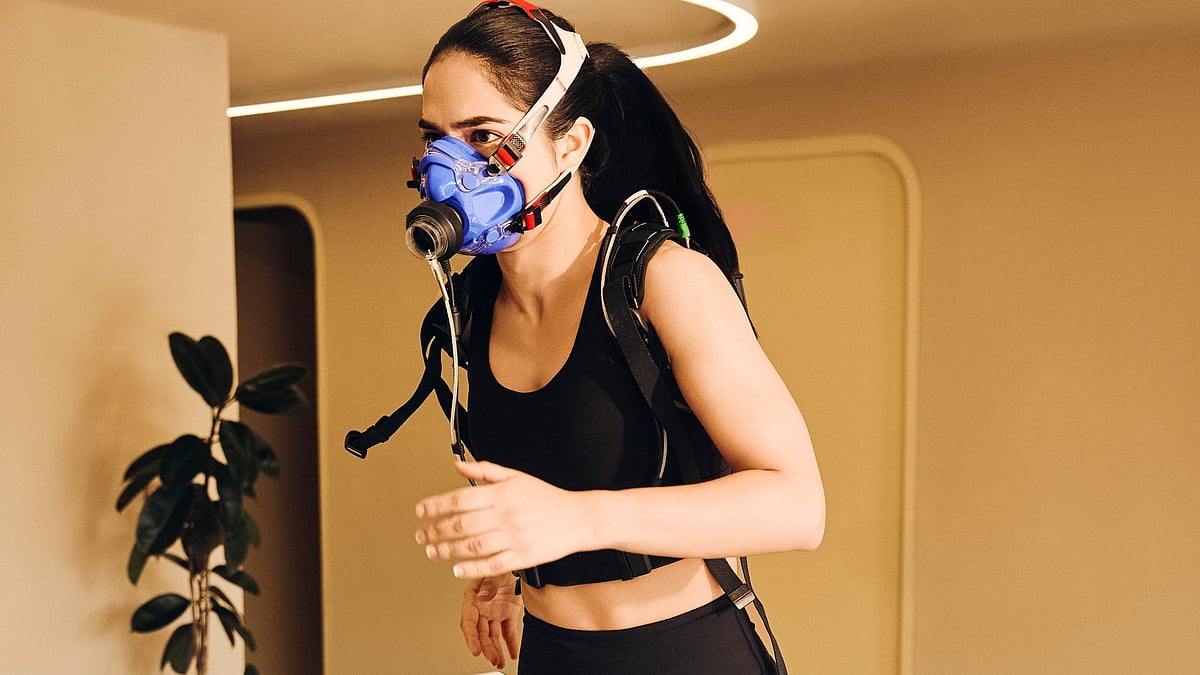
Bengalureans are 'biohacking' their way to good health
Shagun Ohri can sum up a good day in numbers: 7 hours of sleep, 115 gm of protein, 70-80 gm of carbohydrates, 50-60 gm of fat, 1-1.5 hours of strength training, 10,000-15,000 steps, 3-3.5 litres of water and 5 hours of focused work. The entrepreneur, who shuttles between Bengaluru and San Francisco, says having a “baseline fitness” helps her maintain the lifestyle she wants. “I work odd hours, I travel, I am a dog mom. It also helps me show up better in my relationships,” she says.She began structuring her fitness routine in 2024, during a work sabbatical. She hired a personal trainer and started logging her food, water intake, workouts and sleep, in addition to the menstrual cycle she was already tracking. A year later, during a calorie-deficit phase, she even “vibe-coded a tool to track her macros”. “I was obsessed, not anymore. Now I can eyeball my protein intake. It’s become muscle memory,” says the 32-year-old.She currently uses an Apple Watch and the Welltory app to monitor her body, and gets blood tests every six months to check her biomarkers.Cost of peak performance The practice of using data and science to optimise physical and mental health, popularly known as biohacking, has been around for years. San Francisco’s ‘tech bros’ helped bring DIY biology and self-tracking into the mainstream in the 2010s. Last week, the term returned to the news after the Karnataka Food Safety and Drug Administration cancelled Bengaluru’s first peptide party, an event focused on peptides for longevity, citing concerns over their unsupervised use. But given the occasional bad press surrounding the term, few are keen to associate themselves with it.Wellness and performance centres prefer to call what they do “health optimisation” or “proactive preventive healthcare”. Their clients are not looking to treat a disease either. Instead, they want to tackle brain fog, unexplained muscle cramps and weight gain; sleep better; up their game on the paddle and pickleball courts; push their limits at Hyrox race; find relief from pain and inflammation after surgeries; or simply make the next 10 years of their lives healthier.After consulting in-house doctors, they are trying everything from genetic assessments, gut microbiome tests and heavy metal screening to AI-powered motion analysis. They are also stepping into pressurised chambers to breathe 100% oxygen, enduring cryotherapy at -110°C and getting IV drips marketed to boost energy and aid “detoxification”.The cost is usually steep, but that hasn’t stopped people from signing up, from those in their 20s to others well into their 70s. IV drips can start at Rs 1,799, while stem cell therapies, touted for everything “from arthritis and fatigue to fertility and graceful ageing”, can cost as much as Rs 5 lakh. There are also annual memberships priced at Rs 2 lakh, offering access to diagnostics covering as many as 3,500 biomarkers, along with consultations. Other year-long protocols can range from Rs 10 lakh, including 300 machine-based sessions and 24 IV drips, to Rs 15 lakh, offering access to at least 15 specialists. Wearable trackers and a dashboard to monitor body progress come too.A heightened interest in wellness, particularly after the pandemic scare, and a growing buzz around personalised, evidence-based healthcare are driving demand. Local scene Metrolife takes a look at the buzz around centres focused on performance and longevity.For the past three years, Deepika Vasudevan, an IOC (International Olympic Committee) sports nutritionist at NutriFuel, Residency Road, has been piloting a programme to help people “outperform their old selves”. The current batch has six clients. One athlete wants to bring his time down from 11 seconds to 9.58 seconds — access to Olympic-level coaches is planned. CXOs and CTOs are chasing peak cognition, which will involve counselling and IQ tests. One woman client, who hosts high-profile events, loses two hours every afternoon to brain fog. “She wants those two hours of her life back. We are considering adding coffee and mushroom extracts to her meals, or running blood tests,” says Deepika.Some may dismiss this as just another health fad, but the centres claim they are seeing serious takers. Align Health and Longevity Centre, which has branches in Koramangala and Electronics City, says about 75% of its clients are long-term. The commitment could be coming from two reasons. Its founder and medical director, Dr Simran, says, “We have normalised feeling tired, when it shouldn’t be. Experiencing brain fog in the middle of the day, feeling tired by the end of the day, waking up tired after a good night’s sleep, feeling dehydrated despite drinking enough water or experiencing unexplained muscle cramps are all signs that something may be wrong.”And she cuts to the real picture. “Biohacking is not a magic wand. For any therapy to show any results, people must attend weekly sessions for at least six weeks.”Most of their clients are between 30 and 55 years old. About 60-70% seek longevity treatments “to be able to perform at their best, whatever their age”. A small percentage, however, pursue longevity out of FOMO or because of misleading content on Instagram. After screening, those found ineligible are turned away by the centre, she says. The centre also uses an AI-based model that analyses clients’ biomarkers after each test, compares their biological and chronological ages, recommends therapies and allows clients to track their progress on a web app.Even at The Wellness Co in Jayanagar, only 5-10% of walk-ins are the curious crowd, as opposed to those who do their research and come with a goal. Another 5% are turned away after consultations reveal contraindications. Some do not stick with the programme for long. Physiotherapist Christy Jose cites the example of a mining professional in his late 30s who was found to have elevated levels of cadmium and mercury. He showed only marginal improvement because he did not attend sessions regularly.A man in his 50s, however, told Christy that he had never felt this good in his body. “The motivational speaker has been visiting every week for the past 10 months to improve his performance in running and swimming. His routine includes electrical muscle stimulation training (an accelerated workout), far-infrared sauna therapy, whole-body cryotherapy and hyperbaric oxygen therapy.” Such therapies are geared towards improving hydration, oxygenation, blood circulation and cellular rejuvenation, he says. The centre sees strong demand for Oligoscan, which analyses mineral and heavy metal levels in tissue, as well as advanced telomere-ageing tests that assess DNA-related markers. IV drips for detoxification, hair loss and vitamin deficiencies are another big draw, with “customised concoctions” made for each client.Ultrahuman Performance Lab, located in Indiranagar, is the latest in the city to offer evidence-based health optimisation. Its diagnostics can assess up to 3,500 biomarkers across genetics, gut health, blood, cardiopulmonary function, metabolism, cognition and biomechanics. The next step is precise lifestyle intervention, says its business head, Hisham Syed. “For instance, if your VO2 max falls below 17, you won’t be able to climb a flight of stairs or carry groceries around.” He adds that the centre does not look at biomarkers in isolation but correlates them to give a holistic picture of what is happening in the body.The clients are a mixed bag, with varied requirements. Among the younger clients is a man on a calorie-deficit journey. Their approach goes beyond viewing weight loss as a number on the scale. Instead, they look at how body composition is changing, including fat loss, while also tracking biomarkers such as fasting glucose to ensure that the client is moving in the right direction, he explains.For older clients, such as those nearing 70, often the requirement is on maintaining independence and reducing risks such as falls. Their journey may involve a bone health assessment, along with muscoskeletal assessment to how much strength they can produce from different parts of their body.Do numbers tell complete story?But does all the number-crunching and tracking through wearables change our relationship with the body? Deepika says there is nothing wrong with biohacking as long as it is done within limits and under the guidance of experts.Even for Shagun, the experience has been positive. “Though numbers are not cardinal truths, it has helped me understand my hormones and allergies, and that my body stores water when I am stressed. I am somebody who can power through tasks despite fatigue or poor sleep, but if the data shows otherwise, it’s a reminder for me to step back.”
Source: Deccan Herald
🔑 Key Takeaways
- Wire dispatch directly ingested from deccanherald.
- Published at Tue, 01 Sep 2026 23:02.
- Source URL: https://www.deccanherald.com/india/karnataka/bengaluru/bengalureans-are-biohacking-their-way-to-good-health-4131842