
Politics of belonging
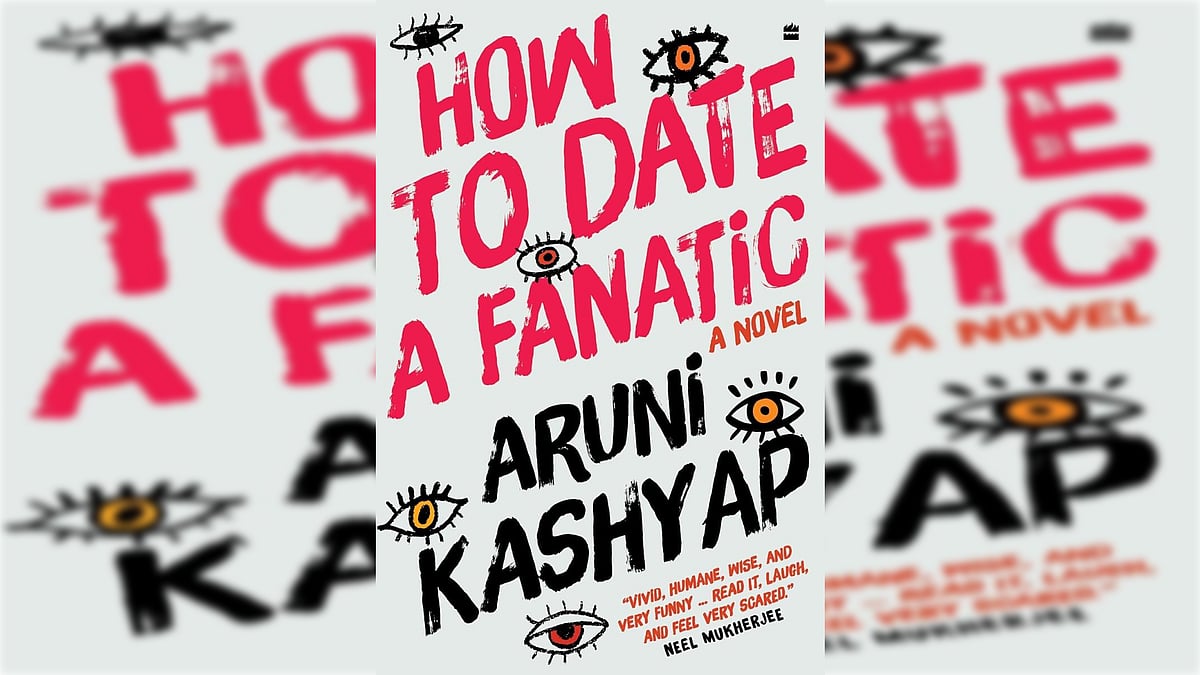
In 2020, Aruni Kashyap’s short story How To Date A Hindu Fundamentalist was published in The Boston Review. I read it and found the story’s pulse invigorating. The story has now been published as a full-length novel with the same characters. How To Date A Fanatic is a political novel that vividly and hauntingly captures contemporary India, with an academic as its protagonist.It opens with an eerie scene of two friends, Rohit and Minti, running from goons in a dhaba and hiding in a water tank. Before they can think of anything else, the water level in the tank starts to rise.Set in post-2014 Delhi and its shared borders with Haryana’s hinterlands, the novel follows Rohit, a young assistant professor of English at Delhi University. He has returned from America with a PhD and lives near two childhood friends from Assam, Sarfaraz and Minti. Rohit is in love with Dhruv, a man younger than him. When Dhruv refuses to reciprocate, we follow a heartbroken Rohit as he navigates his desire and search for companionship through dalliances with several men. As Rohit’s life unfolds, with visits to parents back in Assam and parties with friends, the Indian state rearranges itself into a right-led, fascist regime. Aruni Kashyap takes us down the road with Rohit into an India that is changing universities, ‘modi’-fying ideas of religion, rights, reservation and freedom.From the outset, the author’s brilliance shines through. His writing has a poetic rhythm that builds into a canvas of the personal and political without jarring the prose. He exercises subtlety when required and then stuns the novel with strong details of changing Indian society. A soirée of academics at Minti’s apartment starts with light-hearted banter about their lives and contracts that bind them to the private university in Sonipat. We are let into the world of these academics not just through their material possessions but through their discussions of the current government and the larger politics of reservation in India. The conversation then slips into Rohit pining for Dhruv. Tackling scenes this way keeps the novel’s plot grounded while exploring broader concerns that continue to strengthen the core plot. I thought of Elizabeth Strout’s 2026 novel The Things We Never Say, and Kiran Desai’s The Loneliness of Sonia and Sunny, both of which handle this well. Indeed, Aruni offers a remarkable portrait of Indian queer political literary fiction through his writing.Urban-rural porosityUnlike his debut The House with a Thousand Stories, which was largely set in rural Assam, this novel provides a view of the urban. In fact, it tackles both urban-rural borders and their porosity effectively. And this space has a lot to say in this novel.Traveling on One Leg: Hunt for selfhood amid daily chaosRohit belongs to a village in Assam. He manages to get an education in Delhi after school. He goes to America and returns to Delhi. He shuffles between Delhi, Assam, and Haryana’s hinterland where elite private universities are located. Throughout the novel, we listen to Rohit navigate these spaces and his identity in each of them. The author notices the nuances and makes the reader see them too through Rohit’s first-person voice. He is unhinged with his two friends, awkward at queer gatherings, doesn’t see the point in explaining to his parents about his singlehood and refusal of a heterosexual arrangement, and is politically uncaring about rising violence in ‘Mainland India’.Somewhere in the middle, he thinks to himself that he wants a comfortable life with certain luxuries he’s strived for: a sentiment hard to bypass after having lived in a village amid insurgency. Yet, as his closest friends change in the fight for a free nation, Rohit can scarcely push aside the discomfort growing around his life of stable luxury. The universities are changing, and so are the students and administration. Rohit can barely think of his life ever remaining the same. The claustrophobia is palpable throughout the novel. Alongside Rohit, it makes the reader think of getting out of the labyrinth with no end in sight.Masterful storytelling and rich analysis of what it means to be living under an oppressive regime in India make this a must-read. Between humour, satire, and heartbreak, Rohit’s story reaches the reader in beauty and sadness. Minti is a character who stays with the reader with many questions long after the novel has ended. Unlike Sarfaraz, who is largely elusive, it is her presence that adds more dimension both to Rohit’s life and the novel’s haunting plot. If we have a follow-up novel to this, let it be Minti telling us the story of an India in its ever-changing garb.
Source: Deccan Herald
🔑 Key Takeaways
- Wire dispatch directly ingested from deccanherald.
- Published at Sat, 12 Sep 2026 23:54.
- Source URL: https://www.deccanherald.com/features/books/how-to-date-a-fanatic-politics-of-belonging-4143047