
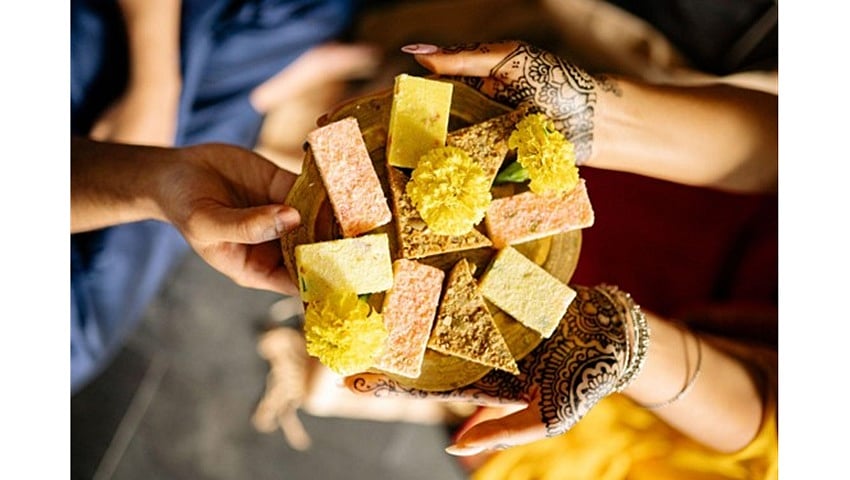
Diwali sweets come in countless varieties, and what finds a place on the festive plate can change from state to state and even from city to city. Every region has its own favourites, shaped by local ingredients, traditio…
Diwali sweets come in countless varieties, and what finds a place on the festive plate can change from state to state and even from city to city. Every region has its own favourites, shaped by local ingredients, traditional recipes, and generations of family customs. From Bengali sandesh and Punjabi kaju katli to Mysore pak from the South, the range is as diverse as the country itself.That variety is part of what makes browsing a curated set of diwali sweets such an interesting exercise every year, since a single collection can hold a Bengali sandesh sitting a few shelves away from a Punjabi kaju katli, two sweets that share almost nothing in taste or texture except the festival they’re made for. Working through each region on its own terms makes that contrast a lot easier to appreciate, starting with the north.What North India Puts on the TableIndian families north of the Vindhyas are very fond of rich foods. Kaju katli can be found everywhere: little diamond-shaped pieces of cashew fudge coated in silver leaf. Another common snack is the motichoor ladoo, made of tiny gram flour balls that are fried and then dipped in sugar syrup. The gujiya, a crescent-shaped pastry with khoya and dry fruits filling and usually associated with Holi celebrations, is also common at many Diwali festivities in this part of the world. When it comes to building a collection of Diwali sweets based on North Indian preferences, these three snacks are a must.What Western India Puts on the TableIn contrast, Gujarat and Maharashtra have their own twist of the spectrum. One such example is the Gujarati dessert called shrikhand, which is prepared by mixing strained yoghurt with sugar and saffron. It is very difficult to prepare this dessert with the same texture anywhere else. Another dish from Maharashtra, which resembles gujiya in terms of shape but has a different taste because of the coconut and jaggery filling used in it, is known as karanji.What Southern India Puts on the TableThe south takes Diwali sweets in a different direction altogether. Mysore pak, made from gram flour, ghee, and sugar cooked until it sets into a dense, crumbly block, is one of the region’s most recognisable exports. Adhirasam, a jaggery-based fried sweet with a chewy centre, is another regional favourite, particularly in Tamil Nadu. Boondi laddoos also appear here, though often made with a slightly different spice profile than their North Indian counterparts, sometimes finished with a touch of cardamom or a scattering of cashews that changes the flavour noticeably.What Eastern India Puts on the TableIn Bengal, their preparation of Diwali sweets revolves around milk based sweets compared to the heavy ghee sweets prepared in other regions. Some of the common sweets include sandesh which is prepared using fresh chhena and is available in many forms and flavors including plain, stuffed with nuts, or even flavored with fruits. Another type of sweet available during this time is the narkel naru which are basically coconut balls joined together by jaggery and are mostly homemade since this recipe is traditionally available in most homes. Another variation is the kalojaam which is dark and denser version of gulab jamun.Elements That Bring It All TogetherIn spite of all the variations, there are certain common elements that crop up again and again on just about every regional sweet table. Whether it be milk or lentils or coconut as the primary base, ghee, sugar, and dry fruits find their way into the dessert somehow. There is also a common tendency of making excess, because sweets have to be shared with neighbors, distributed among distant relatives, and even used for offerings before being tasted at home.This overlap is also why a well-curated collection of diwali sweets tends to work for almost any household, regardless of which region a family’s traditions come from. A box built around a handful of regional specialties, rather than just one style, tends to land better with a mixed group of relatives or a household with roots in more than one part of the country.The Bottom LineDiwali doesn’t have a single sweet table, it has as many versions as there are regions and households in the country, each shaped by local ingredients and family habit rather than any one fixed recipe. What connects them isn’t the taste so much as the intent behind making or sending them: warmth, abundance, and something worth sharing. Anyone putting together a gift this year could do worse than looking at diwali sweets that span a few regions rather than sticking to just one, since it’s an easy way to cover more ground with a single box. Whatever region a family’s sweets come from, the table rarely stays untouched for long once Diwali guests start arriving.
Source: Deccan Herald
🔑 Key Takeaways
- Wire dispatch directly ingested from deccanherald.
- Published at Thu, 17 Sep 2026 06:43.
- Source URL: https://www.deccanherald.com/connect/what-different-indian-regions-put-on-their-diwali-sweet-table-4149207