
State’s anti-conversion law must go
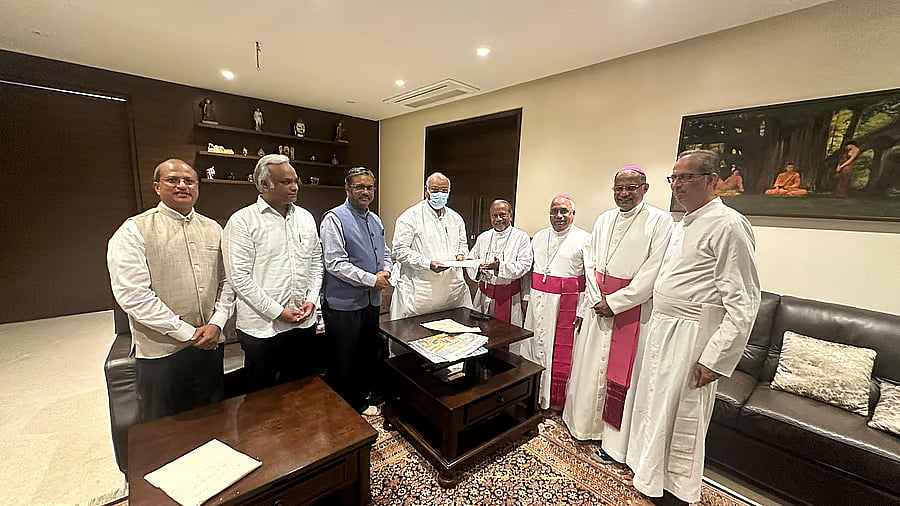
When Archbishop of Bengaluru Peter Machado led a delegation of bishops to meet Congress president Mallikarjun Kharge seeking the repeal of Karnataka’s anti-conversion law, they reminded the party of a pledge made on the eve of the assembly elections. The Karnataka Protection of Right to Freedom of Religion Act, 2022, enacted under the Basavaraj Bommai government, remains on the statute book despite the Siddaramaiah cabinet deciding in June 2023 to repeal it. At the time, the government cited the lack of a majority in the legislative council for not moving the repeal bill, a hurdle that no longer exists. The Act prohibits conversion through force, fraud, coercion, undue influence or allurement. But its procedures raise serious concerns about liberty. A person intending to convert must give 30 days’ notice to the District Magistrate, triggering a public notice, police inquiry, and a post-conversion appearance before authorities. Relatives and associates may also lodge complaints. Such provisions expose consenting adults, particularly interfaith couples, to unwarranted intervention.The constitutional position is nuanced. Article 25 guarantees freedom of conscience and the right to profess, practise, and propagate religion, subject to public order, morality, and health. In Rev. Stainislaus v. State of Madhya Pradesh (1977), the Supreme Court held that propagation does not confer a right to convert another person by force or fraud. Coercive conversion can therefore be restrained. The question is whether voluntary change of faith by an adult should be subjected to extensive prior disclosure and official oversight. In later rulings, the Court has emphasised autonomy, dignity, and privacy in intimate personal choices. In a 2025 judgment on Uttar Pradesh’s conversion law, it cautioned against unrelated third parties using such statutes to intrude upon individual decisions of faith.’Repeal anti-conversion law, provide 1% quota’: Christian delegation urges Congress chief Mallikarjun KhargeThe contrast with Karnataka’s recently enacted Eva Nammava Eva Nammava law is instructive because both laws concern adults making personal choices. That legislation protects adults choosing inter-caste marriages and penalises violence, intimidation, and social or economic boycott aimed at obstructing such choices. This principle should guide the debate on conversion. There is also a deeper social dimension. Conversions cannot be debated without acknowledging the discrimination that drives sections of Dalits to seek dignity and equality elsewhere. The state has a legitimate duty to prevent force, fraud, and coercion, but that duty cannot justify surveillance of voluntary choices. Adults must be free to choose their faith without being treated as suspects. The government must repeal the law and uphold individual liberty.
Source: Deccan Herald
🔑 Key Takeaways
- Wire dispatch directly ingested from deccanherald.
- Published at Thu, 17 Sep 2026 20:06.
- Source URL: https://www.deccanherald.com/opinion/editorial/karnatakas-anti-conversion-law-must-go-4150028