
New Delhi: The Supreme Court has set free two men convicted of possessing nearly 1.8 kg of charas in Madhya Pradesh over two decades ago after finding fault with burning of the seized substance to identify it, saying thi…
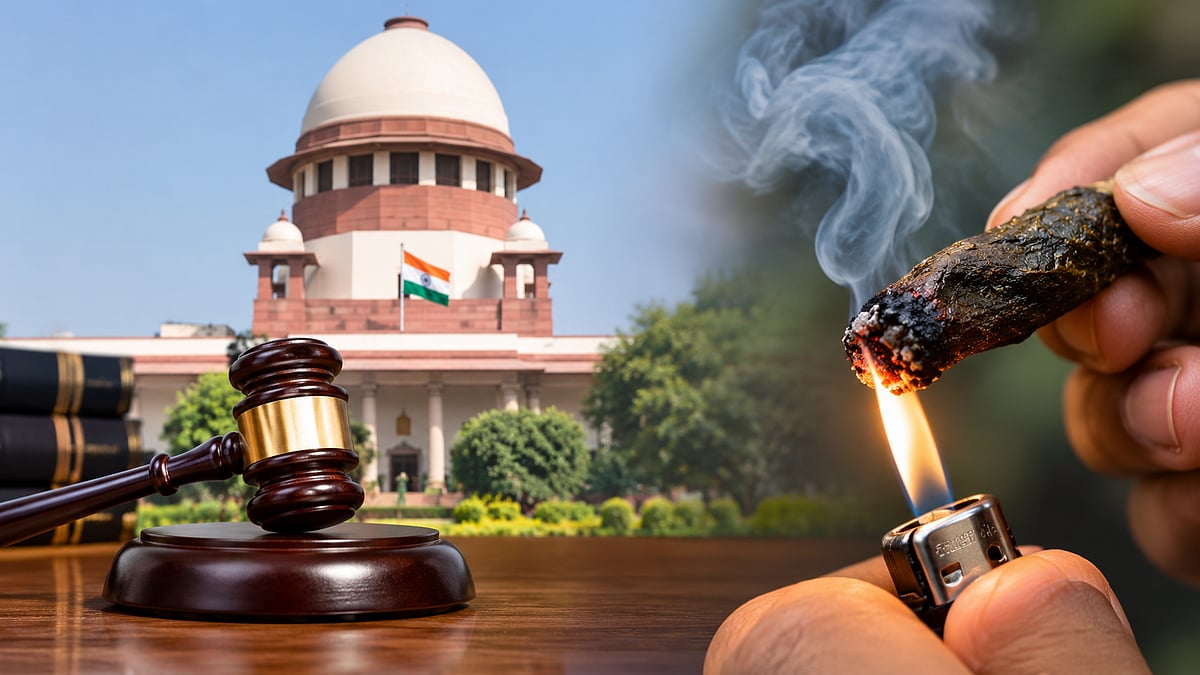
New Delhi: The Supreme Court has set free two men convicted of possessing nearly 1.8 kg of charas in Madhya Pradesh over two decades ago after finding fault with burning of the seized substance to identify it, saying this cannot be used to scientifically establish the material as a narcotic drug.A bench of Justices Sandeep Mehta and Manmohan set aside the convictions of Abdul Rajik and Govind, who were arrested on November 29, 2004, in Jabalpur with two bags containing the alleged contraband. Uttar Pradesh: Man arrested with 18 kg charas worth Rs 9 cr seized at India-Nepal borderThe trial court had sentenced Rajik to 10 years’ imprisonment in 2006 and Govind to eight years; the Madhya Pradesh High Court upheld the verdicts in 2010.On their appeal, the apex court rejected the seizure officer’s claim that he identified the substance as charas merely by burning a portion of it. “There is no scientific material on record to establish that the nature or identity of the contraband could be determined as charas merely by burning a part thereof,” the bench observed. In the absence of reliable scientific evidence, the officer’s testimony alone could not prove the recovered material was charas, it held.Justice Mehta for the bench also flagged multiple procedural lapses that fatally undermined the prosecution’s case. Neither the seizure memo nor the officer’s deposition clarified whether the recorded weights of one kg and 800 grams represented the net weight of the substance or included packaging. Sample packets lacked signatures of the seizure officer, panch witnesses and the accused, and bore no identifying marks.The Forensic Science Laboratory (FSL) report made no reference to the accused’s signatures or thumb impressions on the sample packets. Crucially, the prosecution failed to explain the whereabouts of the samples between December 1 and December 6, 2004 — a five-day gap that broke the chain of custody. No documents, such as a forwarding letter or road certificate, were produced to show the samples remained sealed and secure until they reached the laboratory.The court further noted complete non-compliance with Section 52-A of the NDPS Act, which requires representative samples to be drawn in the presence of a magistrate. Citing recent precedents, including Nadeem Ahamed vs State of West Bengal (2025) and State of Rajasthan vs Tara Singh (2011), the bench held that such failures strike at the root of the prosecution case and render the FSL report unreliable.Once the laboratory report was discarded, no admissible evidence remained to prove the substance was charas under Section 2(iii)(a) of the NDPS Act, an essential ingredient for conviction under Section 20. The court concluded, “The prosecution has failed to establish an essential ingredient of the offence and, consequently, the conviction of the accused-appellants cannot be sustained.” Granting the men the benefit of doubt, the Supreme Court allowed their appeals and ordered their acquittal.
Source: Deccan Herald
🔑 Key Takeaways
- Wire dispatch directly ingested from deccanherald.
- Published at Sat, 19 Sep 2026 07:57.
- Source URL: https://www.deccanherald.com/india/burning-substance-no-scientific-test-to-identify-charas-supreme-court-acquits-two-in-2004-case-4151857