
A 10-minute delivery meets an old warning
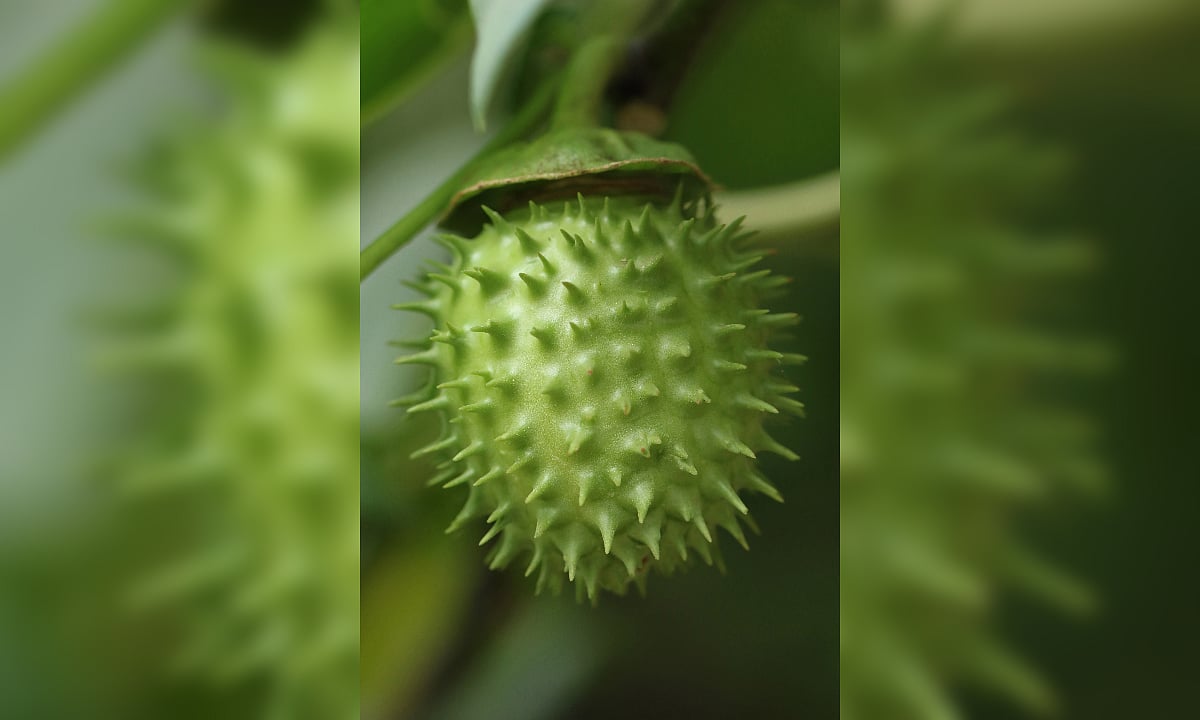
In 1676, English soldiers sent to Jamestown in Virginia gathered the tender leaves of a plant growing nearby, boiled them and ate them. What followed was extraordinary.The men became delirious for days. One blew feathers into the air, another furiously darted straws at it. They laughed, behaved strangely and had to be confined, so that they would not hurt themselves. According to an account written later, they finally returned to normal after 11 days, with little memory of what had happened.Elsewhere, the plant’s ability to produce confusion and delirium acquired a more sinister use. Historical accounts from India describe its seeds being powdered and slipped into sweets, food or drink to stupefy travellers before robbing them. Thepractice became so notorious that the plant would later earn the grim description “roadside poison” in forensic literature. The culprit behind these stories is Dhattura, or more commonly, Datura.5-inch giants of the forest: The secret world of India’s Asian forest scorpionsDatura recently found itself in the news in Bengaluru for an oddly similar reason. A spiny fruit that arrived unasked for with a grocery delivery was consumed by a person who assumed that something arriving with food was edible. They fell ill and had to be taken to the hospital. The incident prompted Karnataka’s food-safety authorities to investigate and stop Datura being sold as food on grocery platforms.Datura’s mind-altering power was never a secret, and for a long stretch of history it was used medicinally in India.In 1802, a British officer returning to Britain from Madras brought an Indian remedy in which dried Datura root was smoked in a pipe to relieve attacks of asthma. The remedy reached British physicians, who began experimenting with locally available Datura stramonium.Datura stramonium was already widespread across Europe and North America, and the practice of smoking Datura for asthma soon spread through both.Patients smoked dried stramonium preparations in pipes. This triggered a century-long medical craze, eventually giving rise to mass-manufactured “asthma cigarettes”. The practice gradually disappeared during the 20th century as safer and more predictable treatments became available. An overdose from Datura can cause severe anticholinergic syndrome, causing rapid heart rate, blurred vision, urinary retention, acute hallucinations, and, in extreme cases, death.Datura metel, the species most closely associated with India, is also called Indian thornapple. It is no apple, and its fruit certainly should not be eaten.The genus contains several species. The soldiers at Jamestown had eaten Datura stramonium, later known as jimsonweed. Datura metel appears to have had a very long presence in India, although Kew Gardens currently treats it as a cultigen originating in Mexico.Poison and medicine bothThe name Datura comes from the Sanskrit dhattura. Somehow, a plant whose ancestry lies across an ocean became deeply embedded in Indian language, medicine, and worship. Last month, we spoke about how potatoes belong to the Solanaceae family. Datura belongs to the same family. But unlike the potato, which humans gradually tamed, Datura has never been bred into something safe to eat. All parts of the plant contain tropane alkaloids, including hyoscyamine, atropine and scopolamine. These interfere with the nervous system and can cause confusion, hallucinations and severe delirium.Curiously, the same compounds, when purified and administered in measured doses, are valuable medicines. Poison and medicine are separated by a thin line of dose and control.From fathers’ wardrobes to Gen Z: Lungi — the South Indian drape is making a comebackYou must have seen large, eye-catching trumpet flowers hanging from small trees in parks or gardens. These are called Brugmansia and are a close cousin of Datura. Both belong to the Solanaceae family, and both contain toxic alkaloids, but here is a way to distinguish them. Datura is usually herbaceous or shrubby, with trumpet-shaped flowers held upright or outward, while Brugmansia is a woody shrub or small tree with enormous trumpets hanging downwards. This drooping relative is called Angel’s Trumpet, while Datura is often called Devil’s Trumpet. Angel or devil, both can cause delirium.Dhattura has long stood on Shiva’s altar and appears among the traditional offerings of Ganesha Chaturthi. Its sacred place never implied that it was edible.What changed in the Bengaluru incident was therefore not the plant, but its context. It entered a grocery catalogue, and somewhere along the way, “fruit” quietly became confused with “food.”Datura encloses its seeds in a capsule armed with spines. Long before humans learnt to fear what lay inside, the plant had already put up a warning of its own.(Motley Garden is your monthly kaleidoscopic view into a sustainable garden ecosystem. The author believes gardens are shared spaces where plants and creatures thrive together. She can be reached at allthingsinmygarden@gmail.com or on social media at @allthingsinmygarden)
Source: Deccan Herald
🔑 Key Takeaways
- Wire dispatch directly ingested from deccanherald.
- Published at Sun, 27 Sep 2026 00:20.
- Source URL: https://www.deccanherald.com/features/art-and-culture/datura-the-deadly-plant-that-fooled-soldiers-doctors-and-recently-a-bengaluru-shopper-4159648