
Made fast,forgotten faster?
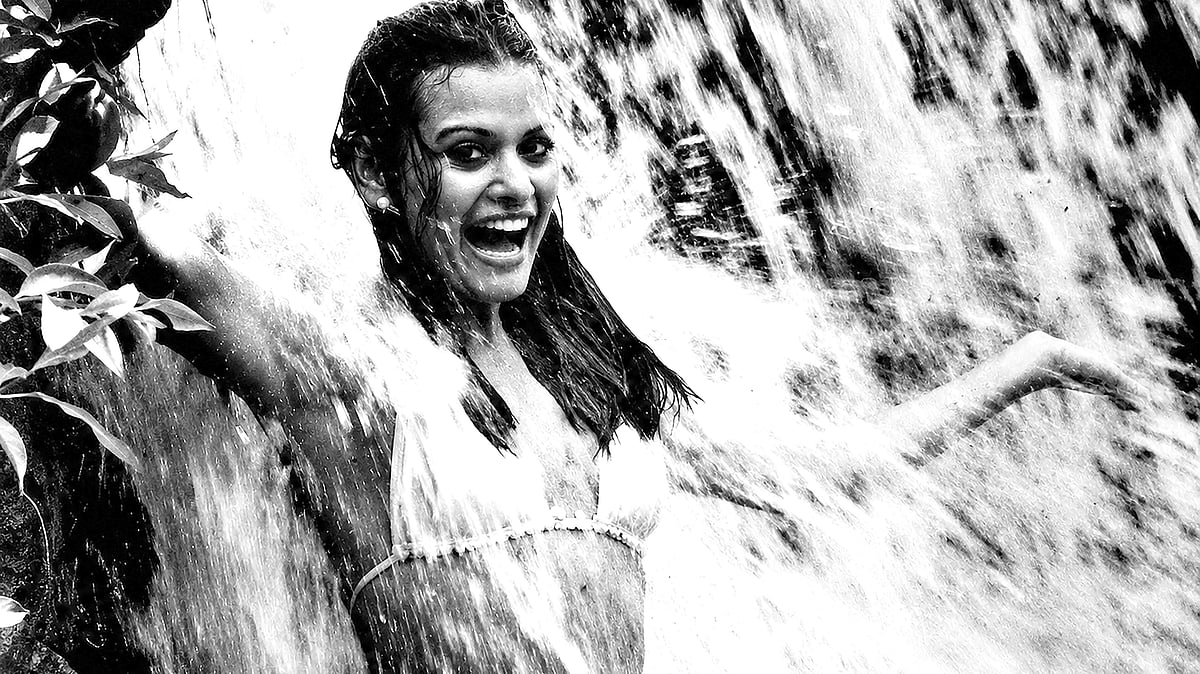
‘Hema, Rekha, Jaya aur Sushma.’ Nobody reads that line. Everybody sings it. It was on the radio first, and then reached television in 1982, written by a small Ahmedabad firm called Purnima Advertising. The tune was not decoration. It was the campaign. Karsanbhai Patel had been mixing detergent in his backyard since 1969 and selling it off a bicycle at about Rs 3 a kilo, against Surf’s Rs 13. By 1985, Nirma had overtaken Surf as the country’s largest-selling detergent whose parent company, with all its science, had been beaten by four names and a hummable tune.‘Lalitaji’ arrived as Surf’s answer in August 1984, out of Lintas, run by Alyque Padamsee, an adman who built a hundred brands and played Jinnah in ‘Gandhi’ (1982) on the side. He said he modelled her on his own mother in a market; colleagues of Usha Bhandarkar, Lintas’s late creative director, credit her. Kavita Chaudhary played the part. ‘Sasti cheez aur achhi cheez mein farq hota hai.’ It never names the detergent. It merely implies that anyone buying the cheap stuff has not thought it through, which is an expensive thing to say to a homemaker. Thirty seconds and a character. It cannot be done in six.Those films were made the hard way because there was no other way. Kailash Surendranath, a director with over 5,000 commercials to his credit, found no underwater camera gear to rent anywhere in India for the Campa Cola film that put a teenage Salman Khan on camera. They borrowed the gear off a feature shoot. For Liril, Lintas dropped Karen Lunel, an Air India hostess, into a Kodaikanal waterfall at five degrees. “Every five seconds, we would pull her out and give her some brandy and put her back in,” Padamsee said, which is either a production note or a confession. Prasoon Pandey, directing for Ogilvy, dug foot-deep trenches across a road outside Jaisalmer and cast two hundred villagers to make the Fevicol bus bounce. Ram Madhvani, who later made ‘Neerja’, shot Happydent Palace in three days and spent four months in post-production on one line by the lyricist Prasoon Joshi: ‘Tera tan roshan, tera man roshan, to jahan roshan’.The volume of jingles was extraordinary anyway. Over 7,000 are credited to the composer Vanraj Bhatia. Prahlad Kakkar walked off Shyam Benegal’s sets in 1977 to start Genesis and later shoot Pepsi’s ‘Yehi hai right choice baby’. It also became an unofficial direction school for R Balki, Nitesh Tiwari and Gauri Shinde. There was no digital correction, and no undo back then. The man who defined the era that followed, Piyush Pandey, Ogilvy’s creative chief and the voice behind Fevicol, passed away last October. He joined in 1982 in client servicing, not creative, and wrote the Hindi lyrics of ‘Mile Sur Mera Tumhara’ as a junior. He said: “Data and tech gave me the ability to find your address and ring your doorbell. But after you open the door, I need to say something that will get me invited inside.”FICCI FRAMES 2025: Government and Industry leaders discuss the future of Indian media and entertainment In 2009, Vodafone wanted a new film for every day of the IPL, so Ogilvy sent Prakash Varma to Cape Town and came back with thirty Zoozoo films in 10 days, actors inside foam bodysuits. Seventeen years on, TAM Sports found half of all ad insertions on linear television during IPL 2026, running under ten seconds. Ten seconds of February’s India-Pakistan World Cup match was quoted at Rs 70 lakh, seven lakh a second, or about two words.The sets changed too, well before anyone blamed software. One travel app cut the director Errol Marks to roughly a sixth of his old fee per film, then stopped hiring and had its own staff act. The Fevicol bus carried two hundred people. Plenty of campaigns now reach air without involving that many.Then the camera stopped being necessary at all. In May last year, Emami’s DermiCool and, a fortnight later, Tata Gluco+ released films generated entirely by AI. The Tata one ran through the IPL without a day of shooting. An AI film costs roughly a third or less of what an actual shoot does. As BestMediaInfo put it in June, everyone assumes AI has replaced the filmmaker, the crew and the budget. In practice, it has only replaced the camera. The ads still exist, the way a photograph of a dose exists. Both are golden. Only one is breakfast.None of which means the industry is poorer. Our adspend has never been higher than it is this year. The money simply moved from making the ads to placing them. Indian advertising did not lose its money. It lost its duration.There is a generation that can still sing four women’s names in the right order, four decades on, and could not tell you why. Nobody taught them. It came through a transistor while cooking, and stayed the way a grandmother’s phrase stays.Somewhere a model is being trained on that jingle right now. Ask it nicely, and it will hand you a Nirma ad in six seconds, in every language the country speaks, for the price of dinner. It will be, technically, a jingle. Nobody’s grandmother will ever hum it. That is the trade, and it will not feel like a loss for years, because nobody mourns a tune that was never written.(The author is an ad filmmaker based in Bengaluru)
Source: Deccan Herald
🔑 Key Takeaways
- Wire dispatch directly ingested from deccanherald.
- Published at Fri, 28 Aug 2026 20:59.
- Source URL: https://www.deccanherald.com/entertainment/made-fast-forgotten-faster-how-jingles-characters-built-iconic-brands-4127542