
Many ways to live with tigers
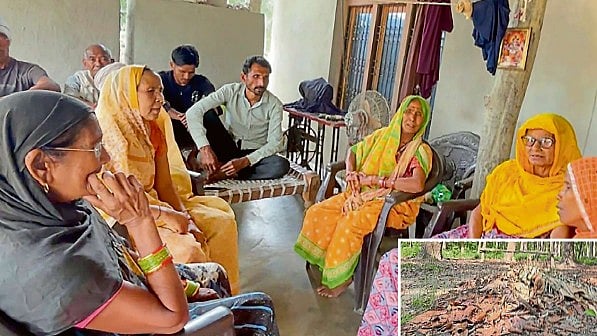
“Tigers have never purposely harmed us!” said Aarti, a forest villager living inside Pilibhit Tiger Reserve, a sentiment echoed by many forest dwellers across Dudhwa-Pilibhit tiger landscape during key informant interviews in June 2026. This deep-rooted tolerance makes a case for partnerships bridging indigenous coexistence with State-led conservation. Wildlife conservation requires collective effort where State and non-State agencies work towards creating a safe haven for these majestic beasts.Uttar Pradesh, India’s third-largest state economy, is driven by sprawling expressways, a massive manufacturing boom and a fierce push to become a $1 trillion economy. Yet, hidden beyond its factories and crop fields lies a green triumph that projects this economic powerhouse as an unexpected vanguard of wildlife conservation.A core pillar of the Terai Arc, Dudhwa-Pilibhit is a critical transboundary tiger landscape in South Asia, with towering Sal forests and marshy grasslands fed by the Sharda and Ghaghra floodplains. Historically, this jungle saw the interplay of outsiders who arrived with guns and axes to conquer its terrain, and tribes who survived here for generations by understanding the forest’s language.During the British shikar era, this became the stronghold of Sultana Daku, India’s own Robin Hood, who used these malarial marshes as a fortress, evading British forces while sharing plundered wealth with marginalised communities. In folk memory, Sultana was not perceived as a criminal but as a protective spirit of the landscape against colonisers who systematically stripped the forests of timber for railways and hunted tigers to near extinction.Amid 73% decline in wildlife population, scientists reveal grounds for hopePost-Independence, legal protection began in 1958 with Dudhwa, a 63 sq km sanctuary for the endangered swamp deer. Conservationist Kunwar Billy Arjan Singh’s advocacy won it National Park status in 1977 under the Wildlife Protection Act of 1972. In 1988, given its transboundary importance, it came under Project Tiger, merging with the adjoining Kishanpur and Katarniaghat sanctuaries to form the Dudhwa Tiger Reserve complex.Meanwhile, Pilibhit followed a different path. Designated a Reserved Forest in 1879, it was managed for high-value Sal timber for over 120 years until it was notified as Pilibhit Tiger Reserve in 2014, ending commercial logging under National Tiger Conservation Authority (NTCA) guidelines.Enforcing legal boundaries catalysed one of modern conservation’s most remarkable turnarounds, proving that when tigers are given an unfragmented sanctuary, nature rebounds with incredible velocity. According to the NTCA’s All India Tiger Estimation, Pilibhit’s tiger population surged from 25 in 2014 to more than 65 within a decade, earning it the international TX2 Award in 2020 from a global coalition of WWF, IUCN and UNDP for doubling its population ahead of schedule.Across the floodplains, the Dudhwa complex is home to a massive source population of 135 resident tigers that actively spill into vital transboundary corridors. Together, this population boom has transformed UP’s borderlands into the heart of the Shivalik-Gangetic tiger landscape.Today, anthropogenic pressures have turned this landscape into a human-dominated agricultural matrix, where grasslands and forests are ringed by human settlements and sugarcane fields. Dudhwa’s core has 16 forest villages and 178 in the Eco-Sensitive Zone (ESZ) and buffer. Pilibhit’s core has no settlements, but its fragmented 127-sq-km buffer is packed with villages abutting the forest, making it one of India’s most intense zones of human-tiger co-occurrence.Tigers have adapted to using sugarcane fields as nurseries and hunting grounds, giving rise to the phenomenon of ‘sugarcane tigers’. Some cubs spend their formative years entirely within the tall stalks, turning the fields into high-conflict zones during harvest. Tigers follow herbivores into crop fields, leading to deadly encounters with farmers. Incentivising coexistence among local conservation actors is crucial for long-term, landscape-level conservation. Rising conflict brings economic instability that erodes local goodwill towards conservation efforts.Mustafabad, a multi-religious forest-fringe village of Pilibhit Tiger Reserve, has a history of helping the forest department manage the reserve, with zero registered cases of forest exploitation. Though once dependent on the jungle for fuelwood, thatch grass, and sustenance, its relationship with the forest evolved in 2010 when the Japan International Cooperation Agency (JICA) laid the groundwork for community-led conservation and institutionalised conservation incentives. This marked a move away from exclusionary practices towards establishing joint forest management (JFM) and eco-development committees (EDCs).What began with safari ticket counters and canteens is now the most successful community-led eco-tourism model among Pilibhit’s forest villages. After JICA’s exit in 2017, WWF-India became a technical partner to the Uttar Pradesh Forest Department, scaling this blueprint by reactivating EDCs, institutionalising frontline monitoring through initiatives such as Bagh Mitra, and creating livelihoods that reduce dependence on non-timber forest products (NTFPs).Today, neighbouring villages such as Selha are tracing a similar trajectory, powered by a women-led Pink Self-Help Group. These models ease economic fragility and give local youth ownership of safeguarding the reserve.Meanwhile, deep inside Dudhwa’s core, Golbojhi practises a unique model of coexistence. Just a kilometre from the Indo-Nepal border, this isolated hamlet of 50 indigenous Tharu households has no roads, grid electricity or mobile connectivity. Its only outside link is a muddy trail through prime tiger habitat that floods during the monsoon.National Endangered Species Day | From Nilgiri Tahr to Bengal Tiger: These animals are struggling for survival in IndiaA colonial-era Taungya village, Golbojhi relies not on modern economic frameworks but on cultural safeguards and traditional ecological knowledge, which community knowledge keepers describe as generational reciprocity with the wild.During a focus group discussion, residents spoke about Van Devi shrines situated on forest trails, where they offer leaves and flowers and ask the goddess for safe passage through tiger territory while collecting NTFPs. Their festivals, such as Chirai and Bhajihar, also showcase this cultural connection. During these festivals, the whole village picnics, dances, and sings folk songs at the forest edge for seven days, thanking different natural elements for their ecological roles, such as birds for controlling pests.Mustafabad and Golbojhi reveal two entirely different philosophies of coexistence within the same landscape. While Mustafabad relies on institutional incentives and economic safety nets to offset the costs of sharing space with predators, Golbojhi anchors its resilience in cultural tolerance.Wildlife movement also varies sharply because of spatial boundaries and conflict-mitigation infrastructure: animals move freely through Golbojhi’s core zone, while a nine-foot chain-link fence restricts access to Mustafabad’s forest boundary. Despite higher wildlife-induced losses, Tharus display exceptional endurance and a localised understanding of species behaviour, rooted in their intimate, daily interactions with the ecosystem.Household surveys clearly map this socio-economic divergence. Golbojhi stays rooted to the landscape, showing greater reliance on subsistence agriculture, livestock rearing, and NTFP collection under the FRA. However, it lags sharply behind Mustafabad in modern livelihoods such as daily-wage labour, eco-tourism and fixed-income jobs.While a modernised workforce handles predator presence by decoupling income from the land, agrarian communities stay resilient by multiplying their touchpoints with the ecosystem, so a livestock or crop loss can be offset by another source, such as forest produce.With the shifting aspirations of youth, change is inevitable, making it unrealistic and inequitable to expect them to bear the costs of wildlife conflict amid dwindling traditional income sources. This raises an existential dilemma: ‘How can conservation keep cultural tolerance alive while meeting the younger generation’s push for modern livelihoods and connectivity?’As conservation evolves through data, AI, tracking technology and eco-tourism, a one-size-fits-all solution is difficult for a landscape as diverse as Dudhwa-Pilibhit. However, advocacy seminars such as Human-Wildlife Conflict: Challenges and Future Strategies, hosted by Dudhwa National Park in June offer hope by giving stakeholders a platform to raise concerns and seek solutions. Fences and maps can designate a tiger reserve, but only collective action can sustain it.The writer is a research associate, National CAMPA, MoEFCC.(Disclaimer: The views expressed above are the author’s own. They do not necessarily reflect the views of DH.)
Source: Deccan Herald
🔑 Key Takeaways
- Wire dispatch directly ingested from deccanherald.
- Published at Thu, 08 Oct 2026 20:00.
- Source URL: https://www.deccanherald.com/opinion/many-ways-to-live-with-tigers-4175657