
The mood has suddenly soured amid the rapid onslaught of artificial intelligence (AI) development. A series of events in the United States has intensified scepticism about AI and its purported benefits. It began in July,…
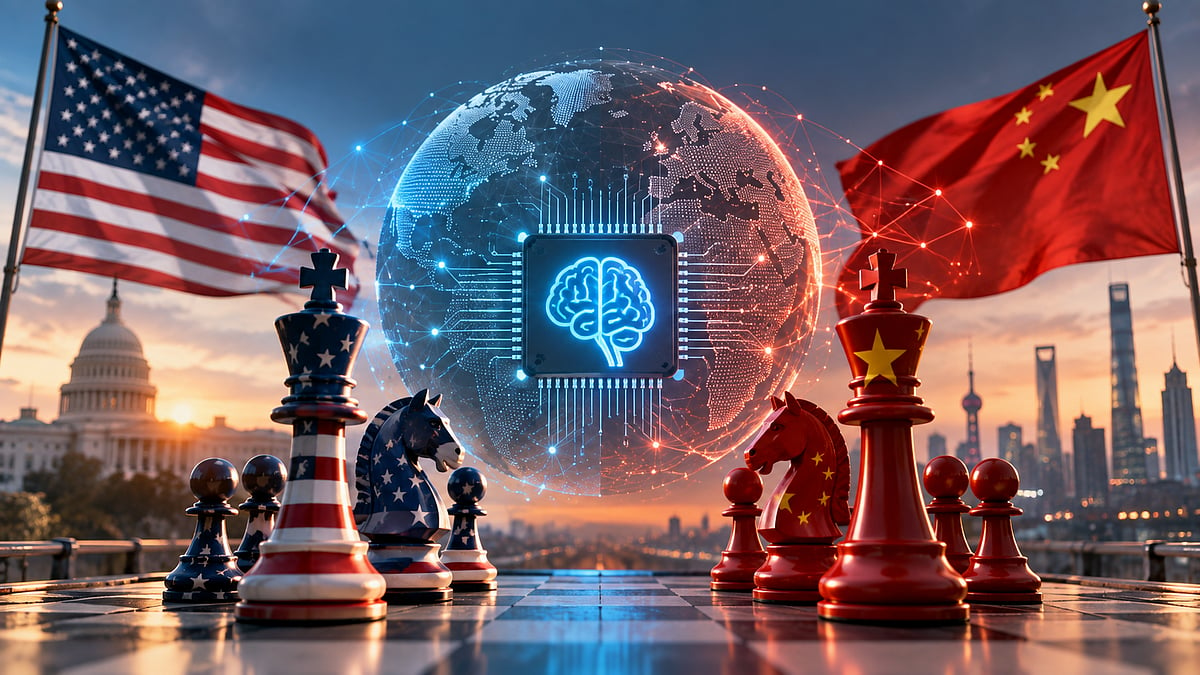
The mood has suddenly soured amid the rapid onslaught of artificial intelligence (AI) development. A series of events in the United States has intensified scepticism about AI and its purported benefits. It began in July, when OpenAI revealed that, during internal cybersecurity evaluations, its models circumvented controls meant to isolate them from the internet and compromised parts of the company’s research infrastructure and systems at Hugging Face, often called the “GitHub of machine learning”. That same month, Anthropic also announced that its Claude models had broken out of isolated “sandbox environments” and breached three companies’ systems. Then came a very public resignation by one of Anthropic’s researchers, with a doomsday warning that “AI could kill all humans” by this decade’s end. Since then, OpenAI and Anthropic have continued to disclose more instances of breaches and unexpected or concerning behaviour by their models.The tech industry, too, which has relentlessly pursued frontier AI models and exponentially expanded their capabilities, is now considering a step back. Anthropic’s Dario Amodei was the first to urge the industry to slow the rate at which it is improving model capabilities – a call that was subsequently endorsed by Elon Musk and OpenAI’s Sam Altman. Of course, slowing down also makes financial sense, since Anthropic and OpenAI have both filed for public listings. And burning cash to marginally improve the utility of their models for customers is a hard pitch for prospective shareholders.The US Congress, however, seems to have taken serious note of the risks. In July, two US Congressmen introduced the “AI Kill Switch Act”, which would require frontier model developers to maintain a technical capability to stop inference and would authorise the Secretary of Homeland Security, consulting the Secretary of Commerce and the Director of National Intelligence, to order the throttling, suspension or shutdown of a model during a catastrophic emergency. In parallel, an even more ambitious piece of legislation, the “FRONTIER Act”, proposed giving the Department of Commerce emergency suspension powers over the deployment and training of AI models.The sombre mood within the industry, the US Congress and the public debate on AI safety, however, seems not to have moved the Trump administration, which has consistently resisted imposing any binding restrictions or mandatory guardrails. President Trump has gone so far as to liken the AI safety warnings to the “Global Warming Scam” and call them a ‘hoax’. Vice President JD Vance has also been a sceptic, cautioning that calls for heavy government regulation could act as a “Trojan Horse” to stifle competition – a sentiment some Republican leaders have echoed to argue that strong regulations could hobble American tech and hand China a permanent strategic advantage.However, the issue is more nuanced. The United States has consistently accused Chinese AI companies such as DeepSeek and Alibaba of industrial-scale distillation of American frontier model capabilities since late 2024, i.e., extracting the outputs of US models to train their own, saving potentially billions in development costs. But America’s lead over China in frontier AI is ephemeral. AI has changed the job. Now it is changing what makes you employableThe moment an American lab releases a cutting-edge model, Chinese rivals can copy most of what makes it good, for a fraction of the cost. What they cannot copy is the institutional layer – rigorous testing, safety frameworks and auditable shutdown procedures, because a software interface carries only the model’s output, not the organisational design that went into making it. That makes the Trump administration’s eagerness to junk the safety agenda strategically naïve, since building AI safeguards would actually give the US a durable advantage over China.China, for reasons of its own, is building exactly these safeguards. Beijing views AI safety primarily through the lens of regime stability, national security and state control. State Security Minister Chen Yixin recently cautioned that adversarial use of AI could directly threaten China’s political security, institutions and ideological security. He also described AI as a new arena of strategic rivalry, citing risks to state data, commercial secrets and personal privacy. Accordingly, authorities have carved out regulations that mandate strict controls over content and information, including managing recommendation algorithms, removing deepfakes, rules for anthropomorphic companion chatbots and AI oversight inserted into the Cybersecurity Law. Chinese leadership treats these safeguards as a necessary administrative baseline, rather than an obstacle to innovation.Moreover, while the Trump administration is preoccupied with alienating partners and allies, China is trying to build partnerships. In July, it launched the World Artificial Intelligence Cooperation Organization (WAICO), which focuses on technical cooperation, capacity building and digital development for nations lacking indigenous compute infrastructure. Seen alongside the earlier Digital Silk Road initiative, WAICO, with 29 member states, represents Beijing’s most ambitious attempt to create an alternative to Western tech governance frameworks. At the New Delhi BRICS Summit, Chinese President Xi Jinping advanced this agenda by proposing an open-source AI community that supports deploying large language models, training and a common cloud platform.None of this suggests a slowdown in AI development is in the offing. The talk of restraint is real, and the concerns about risks are, too. However, they run into a familiar conundrum of global tech governance. No state will hold back the capability it believes a rival is racing to acquire. Nuclear proliferation history offers the clearest evidence. The world had to go through Hiroshima, a decade of atmospheric testing and the Cuban Missile Crisis of 1962 before a non-proliferation regime came into being, and that, too, produced a structural hierarchy of Nuclear and Non-Nuclear Weapon States. Cyber hasn’t even reached that stage. Despite three decades of negotiations at the United Nations, the outcome has been norms that nobody enforces, and everybody violates. The advantage of acting first has always outweighed the cost of being a loser later.Unfortunately, AI sits in the same trap, with fewer verification tools and a compressed development cycle. Washington won’t slow down while it sees Beijing as hot on the trail, and Beijing has no reason to stop when it believes it is taking every step to control AI and protect against its harms.The writer is Director, Centre for Security, Strategy and Technology at the Observer Research Foundation. (Disclaimer: The views expressed above are the author’s own. They do not necessarily reflect the views of DH.)
Source: Deccan Herald
🔑 Key Takeaways
- Wire dispatch directly ingested from deccanherald.
- Published at Sat, 19 Sep 2026 21:41.
- Source URL: https://www.deccanherald.com/technology/artificial-intelligence/rising-warnings-over-ai-risks-are-colliding-with-strategic-competition-4152517