
Words abroad,
silence at home
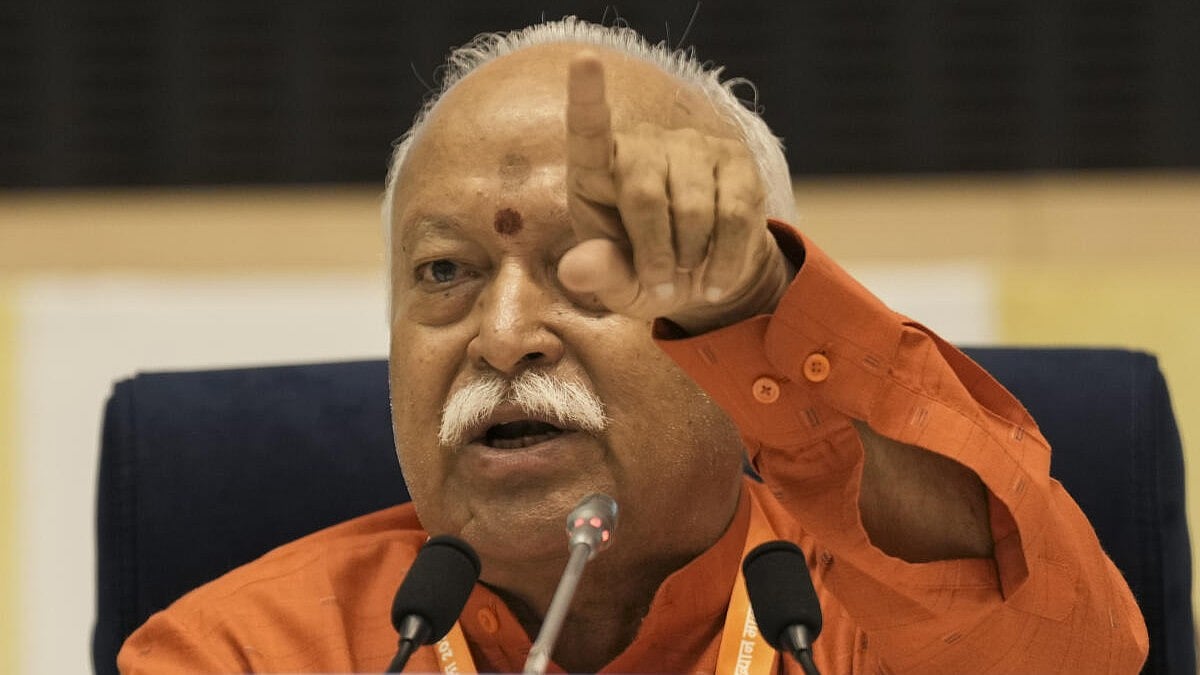
Rashtriya Swayamsevak Sangh (RSS) chief Mohan Bhagwat’s speeches in New York, Toronto, and London have been presented as an important statement of what the RSS stands for as it enters its second century. He spoke of unity in diversity, acceptance of different faiths, and the idea that Hindutva does not exclude Muslims. In London, he said that diversity is natural and should be respected and accepted.Does the RSS chief really mean what he says? Is this a genuine change in the RSS’ understanding of Hindutva or simply better language for an international audience? Only Bhagwat and those close to him know what has changed in his thinking, if anything. What is more important is what difference do these words make on the ground in India, after years in which Muslims and other minorities have often felt politically targeted and socially insecure?Of course, the RSS is not a government; it does not run police stations or pass laws. State governments do that, including several run by the Bharatiya Janata Party (BJP), with which the RSS has a close historical ties. The wider Sangh network also includes numerous other organisations, each with its own structure. Bhagwat cannot be held responsible for every action of a BJP government or every statement by a member of another organisation. But this organisational distance cannot become a convenient escape from responsibility either. The RSS has enormous ideological and organisational influence. If its chief says that Hindutva accepts diversity and that Muslims belong within this larger civilisational framework, it is reasonable to ask whether that principle is asserted when circumstances at home demand it.When a BJP government demolishes homes without following due process, does the RSS publicly question the action? When a cow vigilante group attacks a Muslim, does the RSS unequivocally condemn the violence and demand prosecution? When political leaders use language that singles out a minority community during an election campaign, does the RSS publicly object? In fact, what the RSS does not say can be as important as what Bhagwat says. If the organisation wants to convince Muslims that Hindutva has room for them, it must demonstrate that position when members of the wider Sangh ecosystem act in ways that suggest otherwise. A public statement of disagreement from the RSS would not automatically change conditions on the ground, but repeated silence can create the opposite impression.BJP-RSS have hollowed out education system; Rahul Gandhi standing with students: CongressThere’s another question worth asking: what is being communicated to RSS workers themselves? If Bhagwat’s interpretation of Hindutva represents a significant shift, one would expect it to be reflected in the organisation’s internal discourse as well. Are RSS workers being told that Muslims are equal members of Indian society, and has the language in its publications accordingly changed? There isn’t enough available evidence that such a change has taken place. Therefore, a speech to thousands of diaspora members cannot, by itself, effect ideological change within an organisation of this size.One must remember that the tour was part of the RSS’ centenary-year global outreach, which the organisation itself described as an effort to deepen civilisational dialogue and promote social harmony. There’s nothing unusual about an organisation explaining itself to an international audience, especially one that has faced considerable scrutiny abroad; engaging with diaspora communities, religious leaders, and public figures can serve the legitimate purpose of explaining its worldview.But this is no reason to treat the speeches as evidence of domestic change simply because they sound different from the political rhetoric heard in India.The next elections will provide a particularly useful test. If the BJP’s candidates and campaigners continue to use divisive language, the contradiction will be difficult to ignore, especially if the RSS stays silent when such language is used. So, Bhagwat’s sincerity and intentions can be tested against three things: what the RSS says when members of its wider ecosystem cross the line, what it teaches and publishes internally, and how its political allies behave during elections.For all we know, Bhagwat’s speeches represent a genuine attempt to redefine how Hindutva is understood. If so, his centenary-year message will be meaningful. But it must travel beyond foreign stages and reach the organisation’s own cadre, affiliates, and political allies. So, for now, the most reasonable response is neither applause nor dismissal, but to watch what happens in India. If the wider Sangh ecosystem’s conduct begins to reflect Bhagwat’s language, his speeches will have acquired meaning beyond the diaspora. If it remains confined to foreign platforms, the obvious question will be: was this a change in ideology, or just in presentation?(The writer is an educator and political analyst) (Disclaimer: The views expressed above are the author’s own. They do not necessarily reflect the views of DH.)
Source: Deccan Herald
🔑 Key Takeaways
- Wire dispatch directly ingested from deccanherald.
- Published at Sun, 20 Sep 2026 21:36.
- Source URL: https://www.deccanherald.com/opinion/words-abroad-silence-at-home-4153173